
Modern Rodding Tech
InTheGarageMedia.com
Hot pink 1932 Ford Roadster with black flame graphics, steel wheels, and a vintage custom stance
1. MeKenzie Murphy’s roadster has several subtle body modifications that give it a unique character. We’ll look at how the cockpit has been enlarged and how the windshield was laid back at a rakish angle.
Room to Roam typography
Expanding Interiors with Precision Metalwork
By Ron Covell
Photography by Jessica Roach & NotStock Photography
M

eKenzie Murphy is a real auto enthusiast. When she decided to build a 1932 Ford highboy roadster, she turned to Johnson’s Hot Rod Shop in Gadsden, Alabama, to construct this unique ride. Alan Johnson has a long history of turning out traditional-style hot rods fitted with unique upgrades, and Murphy knew she could count on him to add his special touch when building the car of her dreams.

While the hot pink color is unusual, it has helped to gather a lot of attention for the car, which won the 2024 Street Rod of the Year award at the Triple Crown of Rodding show in Nashville. It was also a Top 5 finalist for Street Rod of the Year with Goodguys and a finalist for the America’s Most Beautiful Roadster award at the Grand National Roadster Show.

This car has a traditional character, but many special features make it unique. In this issue, we’ll look at how the cockpit was stretched and how the windshield was chopped and laid back to a radical angle.

The cockpit was enlarged by moving the rear edge back, and then the quarter-panels were modified to match. Many people don’t see this modification at first glance, but it allows more comfort for the driver and passenger and the use of full-thickness padding on the seatback. Radical changes like this must be handled with care to preserve the classic proportions of the roadster body, which looks great in stock form.

The panel just behind the seatback was cut laterally, and the front portion was moved back 4-1/2 inches. After trimming the panels to fit neatly together, they were TIG welded and the joint was smoothed. The center body panel position provided a target for fitting the complex shapes at the top front corners of the quarter-panels. Many body lines converge in this area, subtly tapering toward the rear, so it took a lot of tweaking and massaging to get this area to retain its visual flow—but the results speak for themselves.

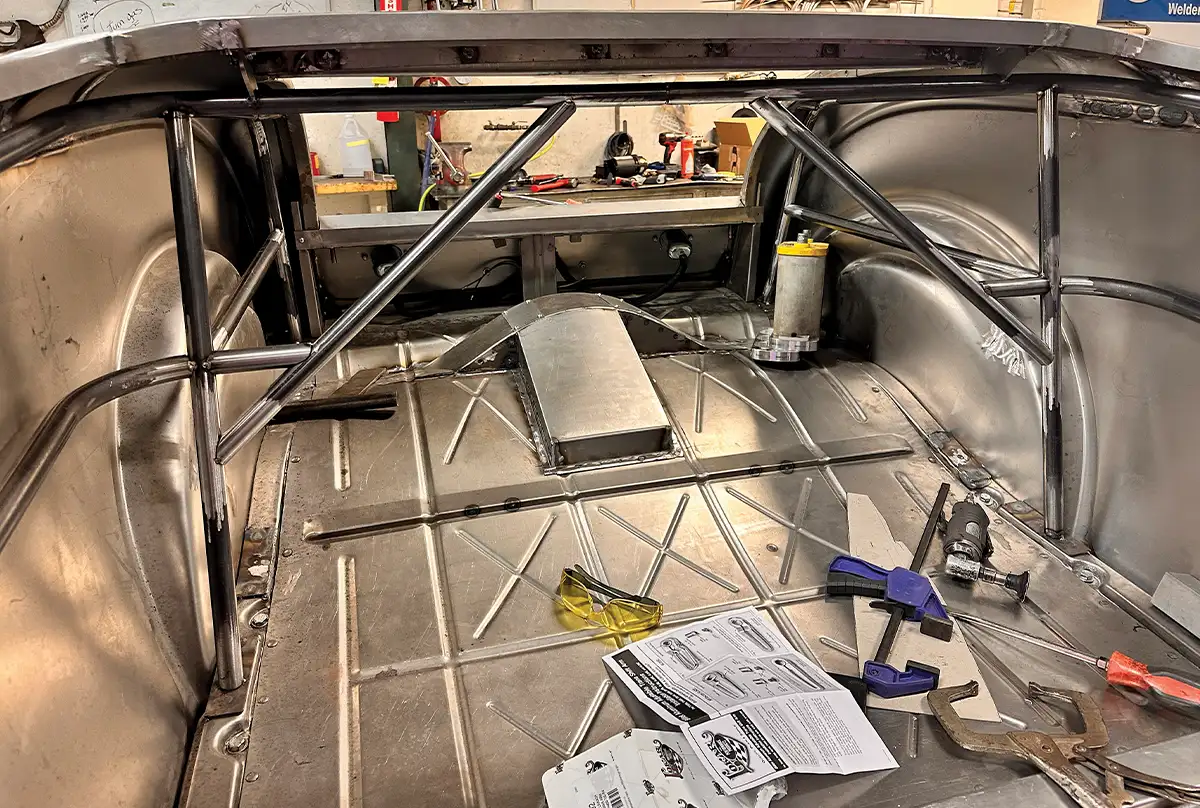
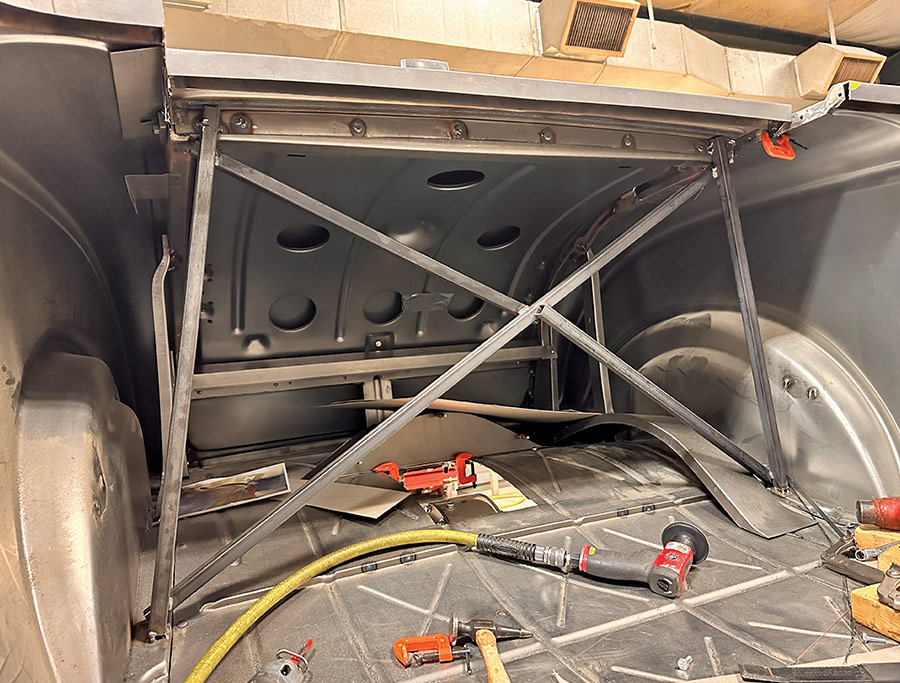
Sturdy tubular bracing was placed inside the roadster body, carefully positioned to be out of the way while providing attachment points for the upholstered panels.

The windshield was laid back a rakish 25 degrees over stock. This required radically reshaping the bead on the cowl that the weatherstrip fits against, and special cast bronze lower stanchions were required to hold the posts at their new angle.

The photos show how this work was accomplished. This unique roadster underwent a host of other modifications, which we’ll examine in future articles.

A close-up of the structural reinforcement inside a 1932 Ford Roadster, showing custom-fabricated brackets
2. The first step in enlarging the cockpit was to make a lateral cut in the panel ahead of the trunklid and move the front portion back 4-1/2 inches. Once the position was finalized and the edges trimmed to match, the pieces were tack-welded back together.
The rear chassis bracing of a 1932 Ford Roadster, featuring crossbars and metal reinforcements for rigidity
3. Temporary bracing made from square tubing was tack-welded into place, ensuring the body’s alignment was maintained as the modifications were made.
The rear deck of a 1932 Ford Roadster under construction, with welding work on the body seam
4. At this stage, the center panel was finish welded, and the layout for the modifications to the quarter-panels began.
A freshly welded trunk panel seam on a 1932 Ford Roadster, prepped for further metal finishing
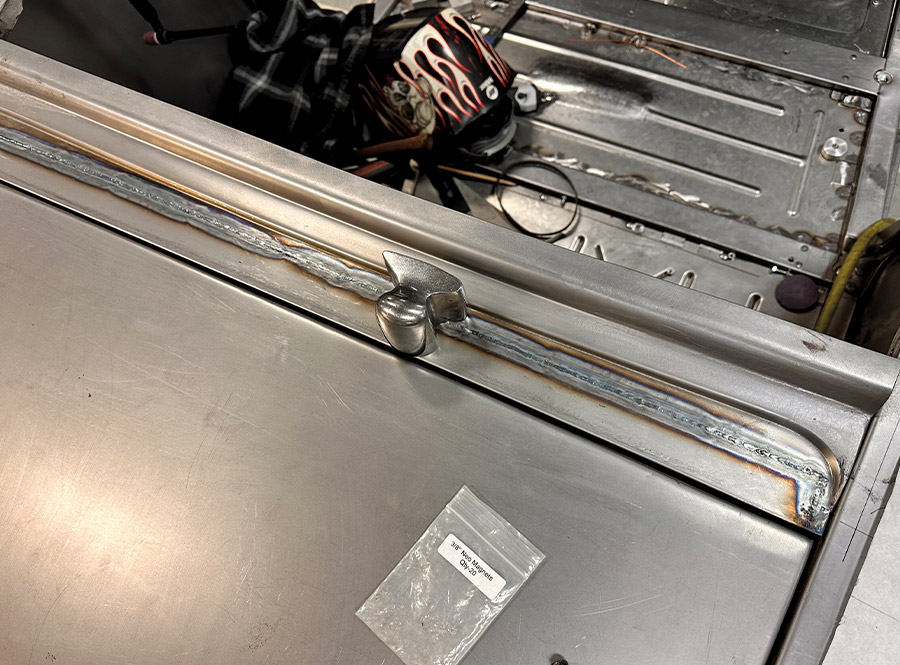
5. The long TIG weld was worked with a hammer and dolly to smooth any distortion.
A template set on the rear quarter panel of a 1932 Ford Roadster, marking custom body modifications
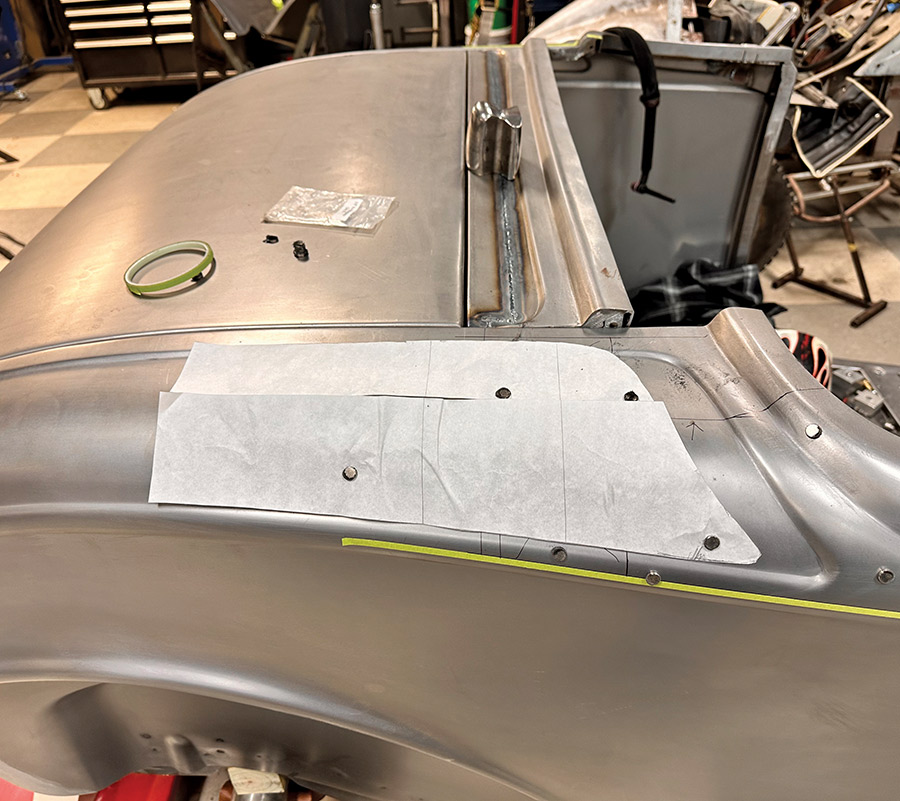
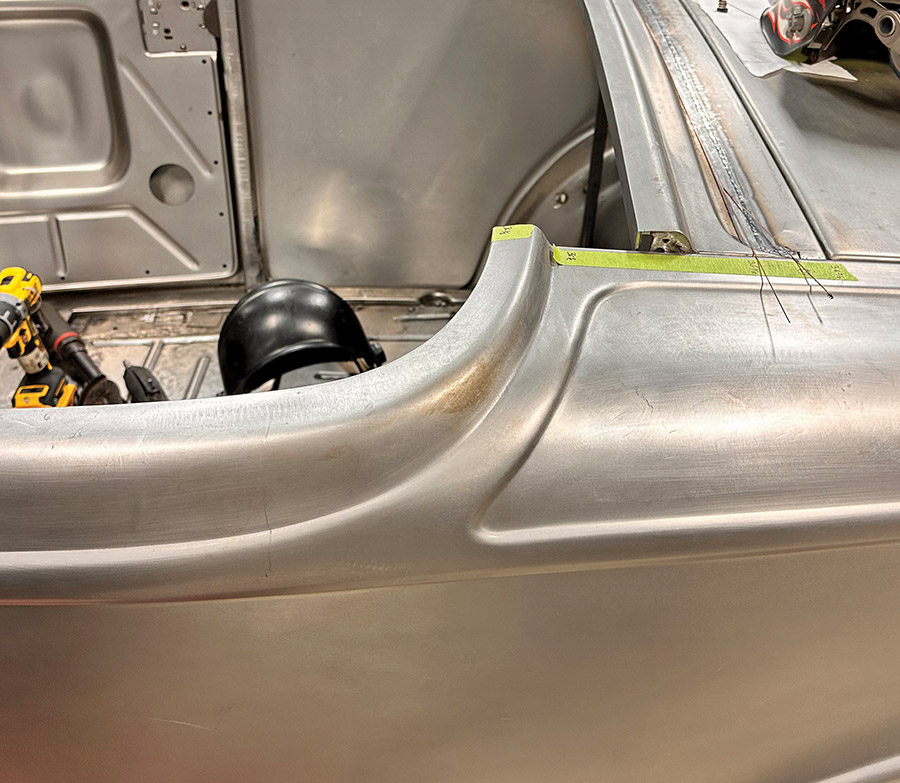
6. A paper pattern was made to fit the body lines on the quarter-panel and adjusted to fit in its new location. Small magnets hold the pattern to the metal.
A chopped and modified body line on a 1932 Ford Roadster, mid-way through fabrication
7. The quarter-panel was cut into several pieces and carefully reassembled on the body. This is a tricky job since the many creases in the panels need to flow together continuously.
Detailed welding work shaping the custom quarter panel of a 1932 Ford Roadster
8. All the panels are meticulously fitted and tacked, and the finish welding can be completed.
Metal finishing and structural reinforcement welded onto the rear section of a 1932 Ford Roadster
9. After welding, all the joints are worked with a hammer and dolly to restore the proper contours.
Side profile of a 1932 Ford Roadster mid-customization at Johnson’s Hot Rod Shop
10. The careful fitting resulted in nearly perfect alignment of the panels.
A chopped door section on a 1932 Ford Roadster showing fresh metalwork and structural modifications
11. Here’s a close-up shot of the gap that needs to be filled with new metal. Both the outer skin and inner structure need to be rebuilt.
Smoothed and blended metalwork on the quarter panel of a 1932 Ford Roadster after welding and grinding
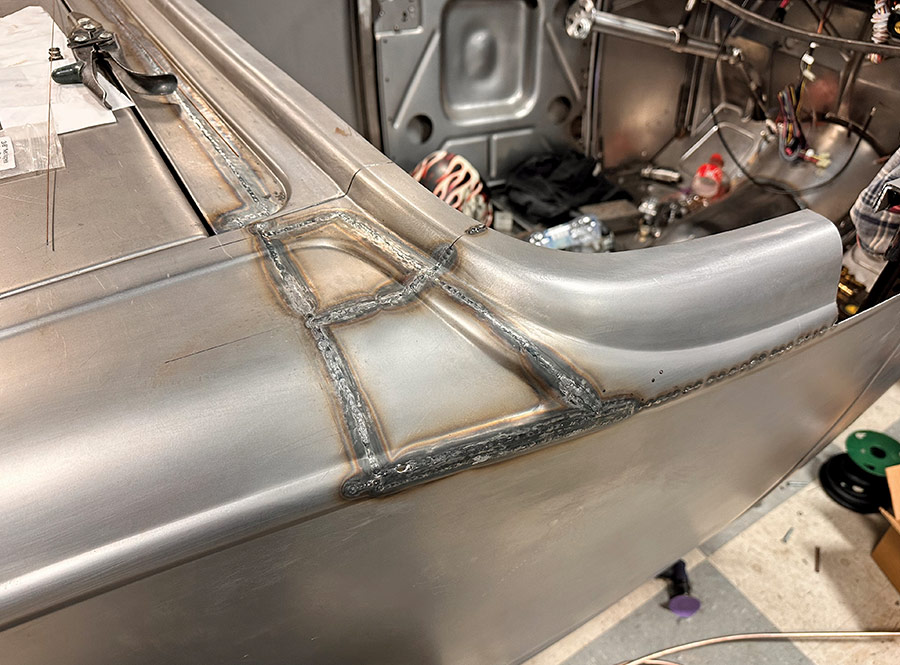
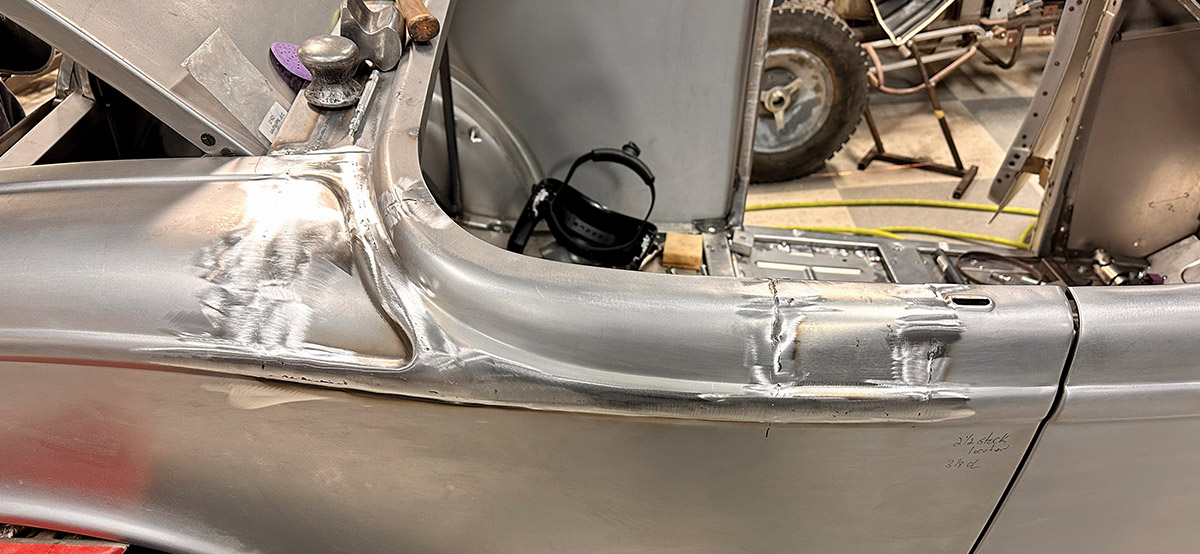
12. After the filler pieces were fitted and all the welds were finished, the entire area was smoothed with careful hammer work, and the welds were ground smooth.
A rear deck corner of a 1932 Ford Roadster with precise metal shaping and structural reinforcement
13. After completing the passenger side of the body, the same steps can be carried out on the driver side.
A 1932 Ford Roadster door seam with blended metalwork, showcasing meticulous welding and finishing
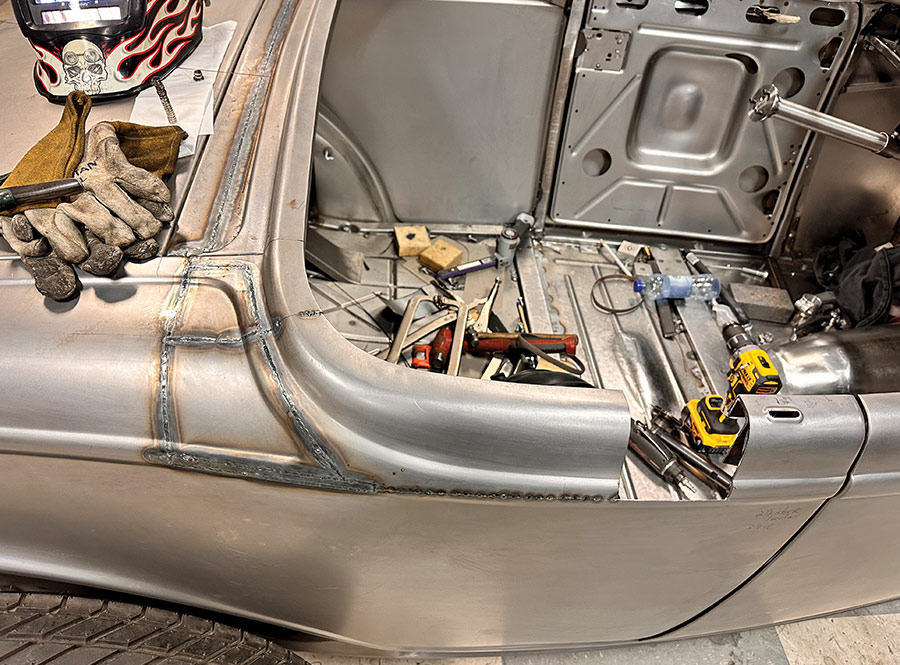
14. The panels have been fitted, tacked, hammered, finished welded, rehammered, and ground smooth.
Interior view of a 1932 Ford Roadster trunk with cross-bracing and exposed sheet metal fabrication
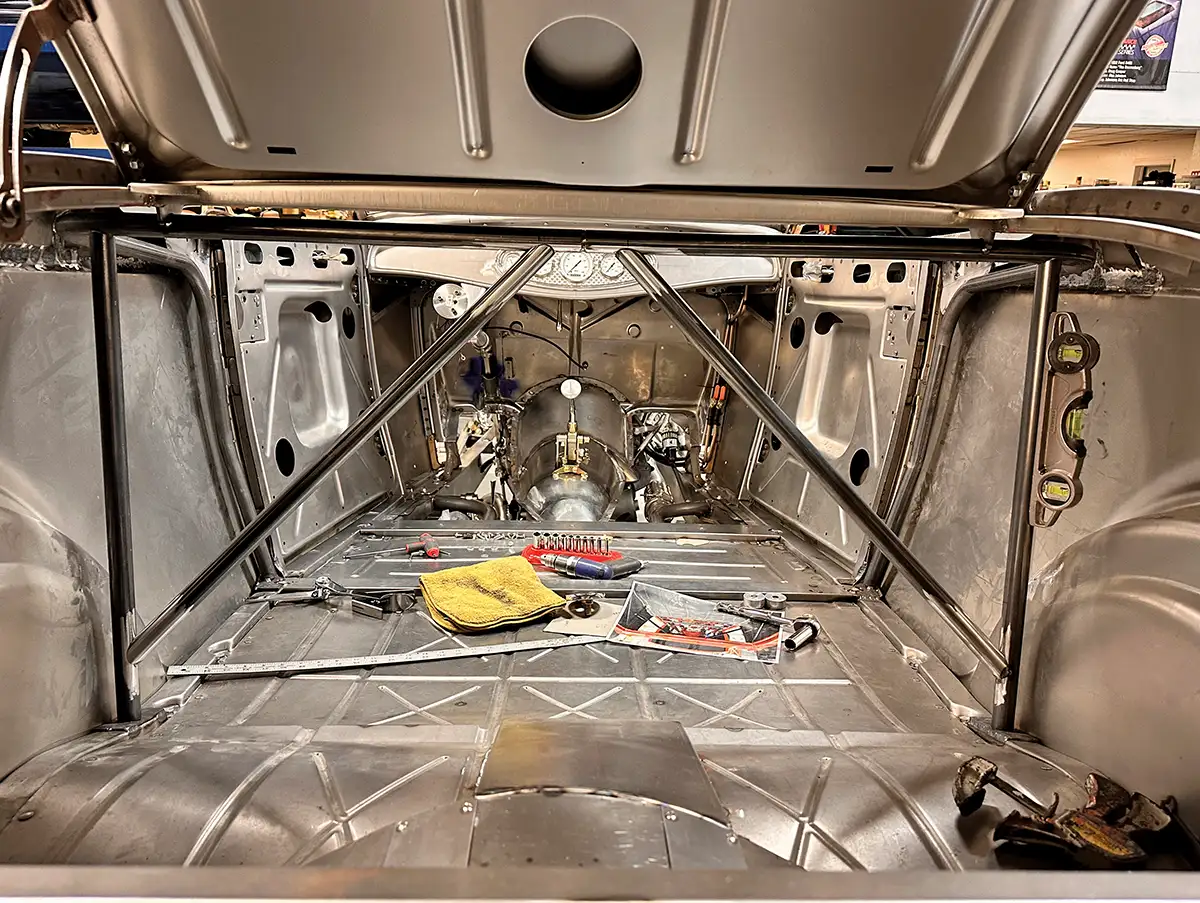
15. After all the welding and smoothing on the exterior panels were completed, the temporary inner bracing was removed, and stout round tubing was fitted, making the body much stiffer than stock.
Rear chassis bracing inside a 1932 Ford Roadster, featuring custom tubing and panel reinforcement
16. A view from the front shows how the reinforcement tubing is placed so it won’t interfere with the inner panels and upholstery and neatly follows the contours of the body edges.
Close-up of a 1932 Ford Roadster’s body seam, shaped and smoothed for a seamless finish
17. The original windshield was fairly upright and the bead on the cowl for the rubber seal on the bottom of the windshield frame was nearly straight across. This bead must be curved and repositioned with the windshield at a rakish angle. You can see here where the original bead was removed, reshaped, and fitted back to the cowl.
Another angle of a 1932 Ford Roadster’s rear panel, showing refined metal shaping and finishing
18. The cowl bead was carefully mated to the special bronze windshield posts made by Steadfast Manufacturing.
Custom windshield frame mock-up on a 1932 Ford Roadster with brass stanchions and precise fitment
19. Here, the 2-inch chopped windshield frame is being fitted to the posts and the body.
Convertible top frame mock-up on a 1932 Ford Roadster, with custom windshield stanchions and seat padding
20. The Johnson’s Hot Rod Shop–modified frame for the convertible top was recontoured to fit the elongated cockpit. Note that the attachment points on the quarter-panel have been moved back 4-1/2 inches.
Vibrant pink 1932 Ford Roadster with black flames, captured in motion with a driver on an open road
21. This view shows just how much room there is in the cockpit of this award-winning roadster.
SOURCE
Modern Rodding
VOLUME 6 • ISSUE 55 • 2025