
Modern Rodding Tech
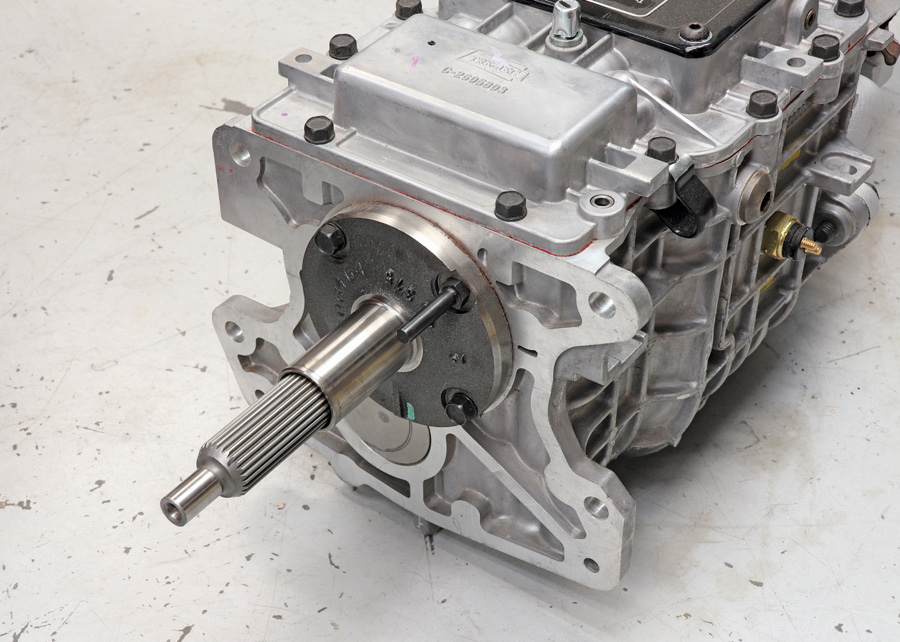
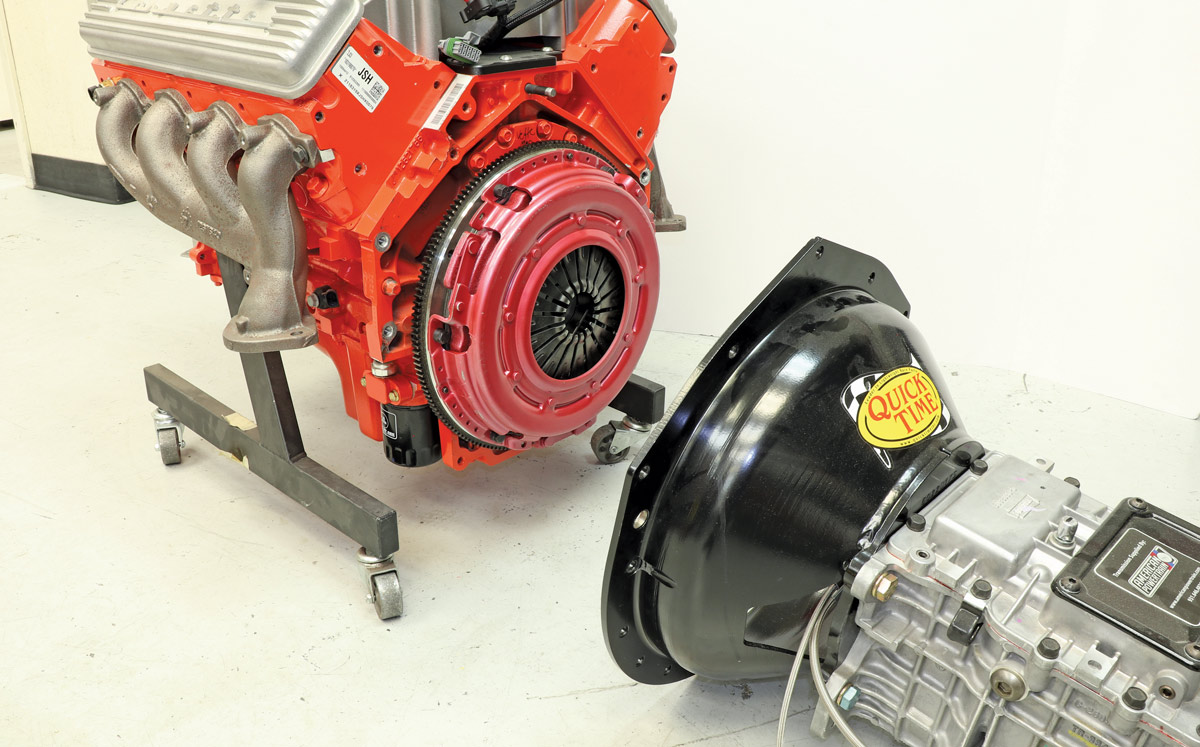
1. Our LS3 is equipped with a Lokar LS Classic Series ’63 Chevy–style electronic fuel injection system. The transmission is a TREMEC TKO five-speed from American Powertrain.
1. Our LS3 is equipped with a Lokar LS Classic Series ’63 Chevy–style electronic fuel injection system. The transmission is a TREMEC TKO five-speed from American Powertrain.

 Photography by Brian Brennan
hile tradition will always be an important part of hot rodding, the impact of technology cannot be denied. In the same way the Flathead Ford was eclipsed by overhead valve designs, the popularity of the Gen I and Gen II small-block Chevy has lost ground to the LS series of engines (address all hate mail directly to Brian Brennan).
Not exactly the new kid on the block, Chevrolet introduced the LS series in 1997 (and yes that really was 25 years ago). And while some hot rodders would complain when these engines first began to be used that “they don’t look right,” the advantages of the LS were hard to ignore. As a result of their performance, durability, and availability the LS series have become today’s go-to hot rod engine.
Along with the popularity of LS engines has come a renewed interest in hot rods with three pedals. The reasons are simple enough—today’s crop of five- and six-speed manual transmissions offers great gear ratio spreads for performance and overdrive top gears for highway cruising. And, of course, nothing is cooler than going through the gears manually rather than having it done for you automatically. In the example shown here we’re combining a Chevrolet LS3 crate engine with a TREMEC TKO five-speed transmission. We went to Summit and gathered the parts in question.
TREMEC transmissions are manufactured by the world’s largest RWD manual transmission company. They produce a variety of transmissions with torque capacity from 300 lb-ft to well over 700 lb-ft. Various gear ratios are available in five- and six-speed transmission with five-speeds having an overdrive top cog and six-speeds overdrive in the top two gears. The result is improved performance through the gears with cruising rpm dropped 18 to 50 percent. All transmissions feature internal rail shifting mechanisms and American Powertrain offers kits to move the gearshift lever forward, backward, and even off to the side to accommodate any installation.
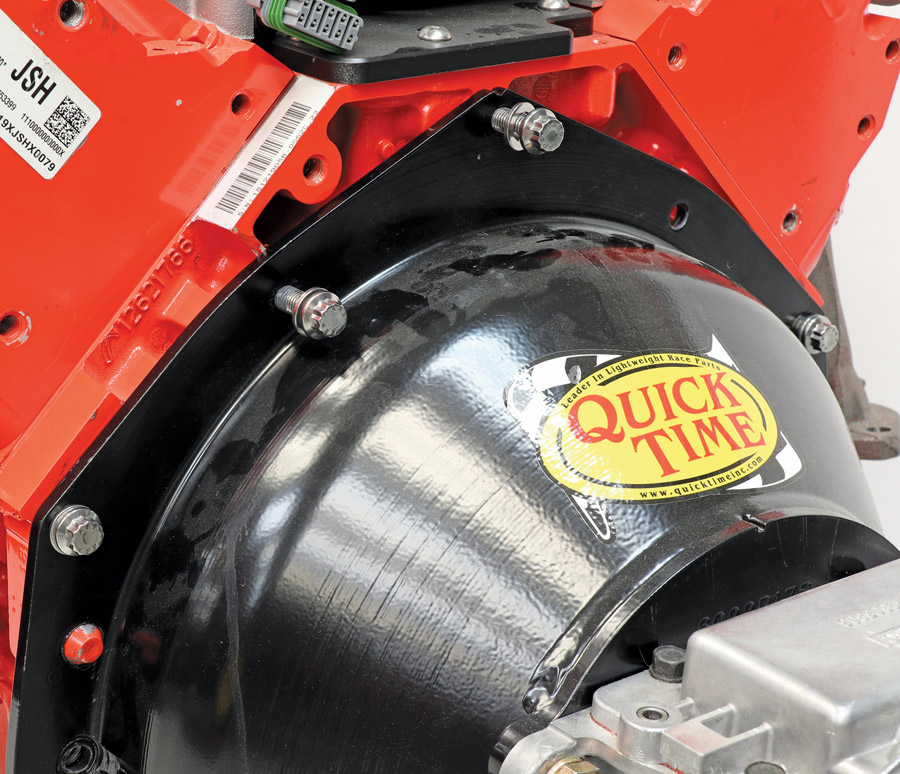
In the example shown here we used a Quick Time RM-6036 bellhousing from American Powertrain that connects GM LS engines to transmissions utilizing the GM standard pattern such as the Muncie, Saginaw, BorgWarner T10, and TREMEC TKO transmissions. This bellhousing is SFI 6.1 certified and is a universal fit rather than vehicle specific. Quick Time also offers bellhousings for use with all the other TREMEC transmissions, such as the Magnum series and LS engines (there are applications for other engines as well).
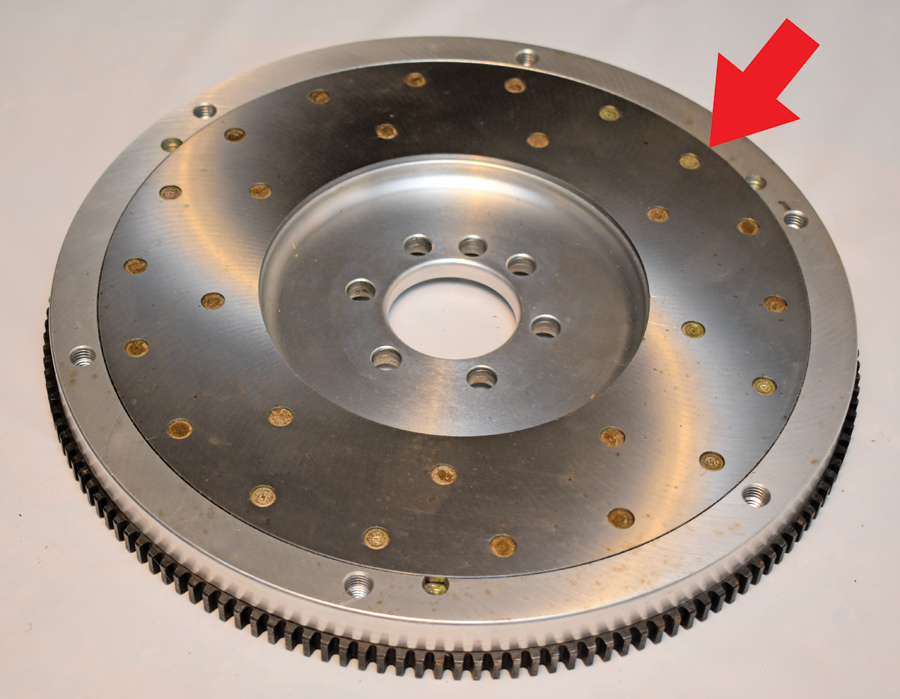
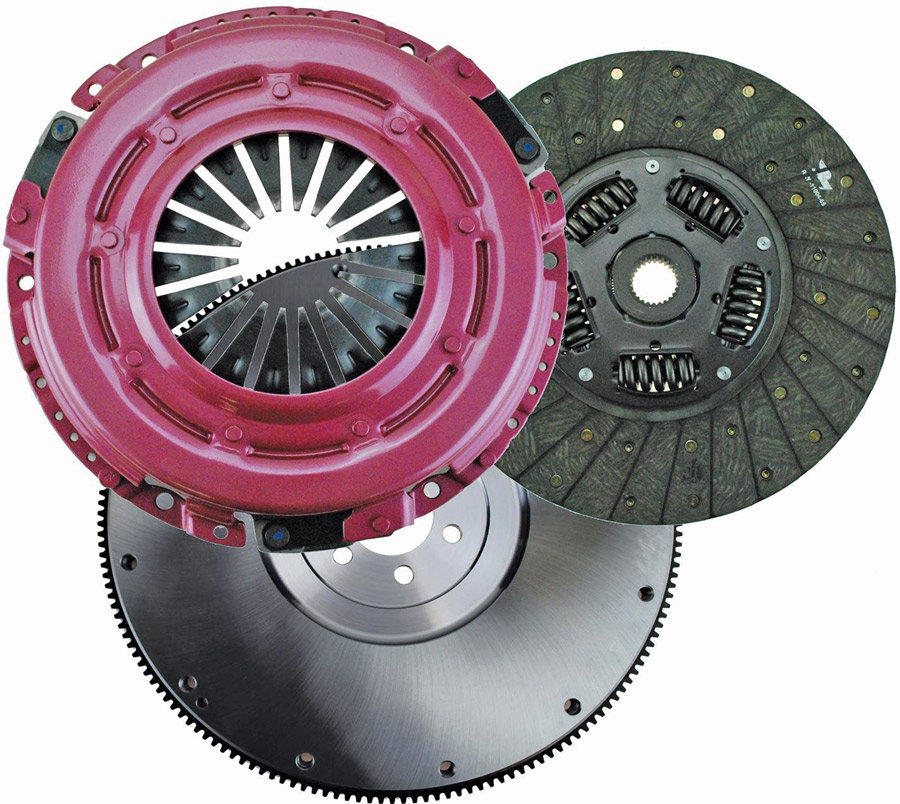
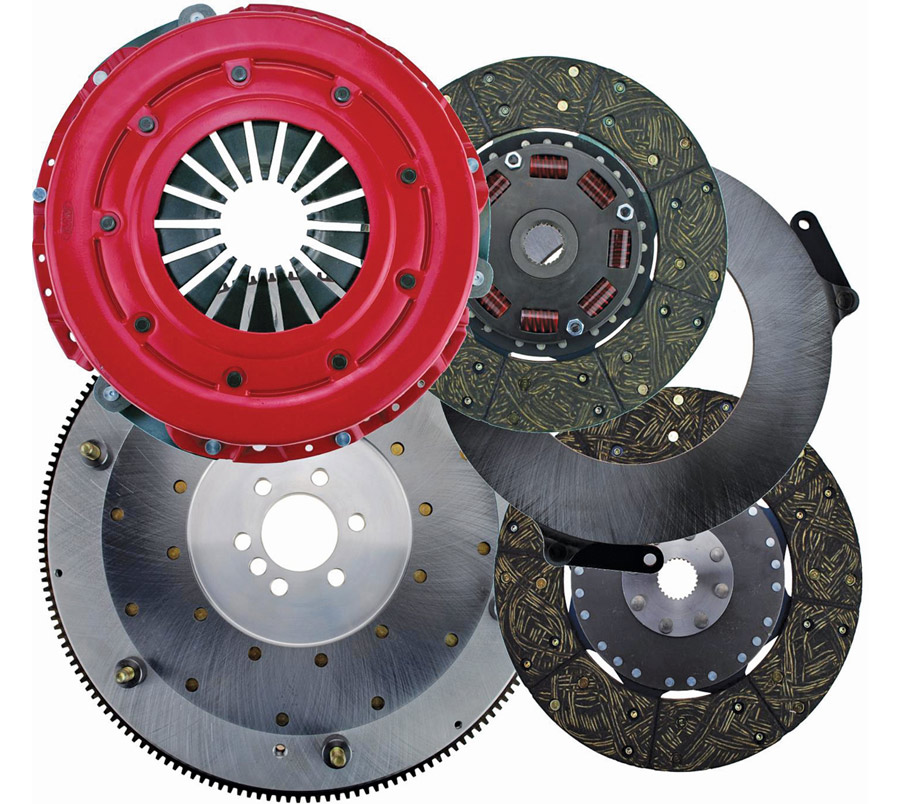
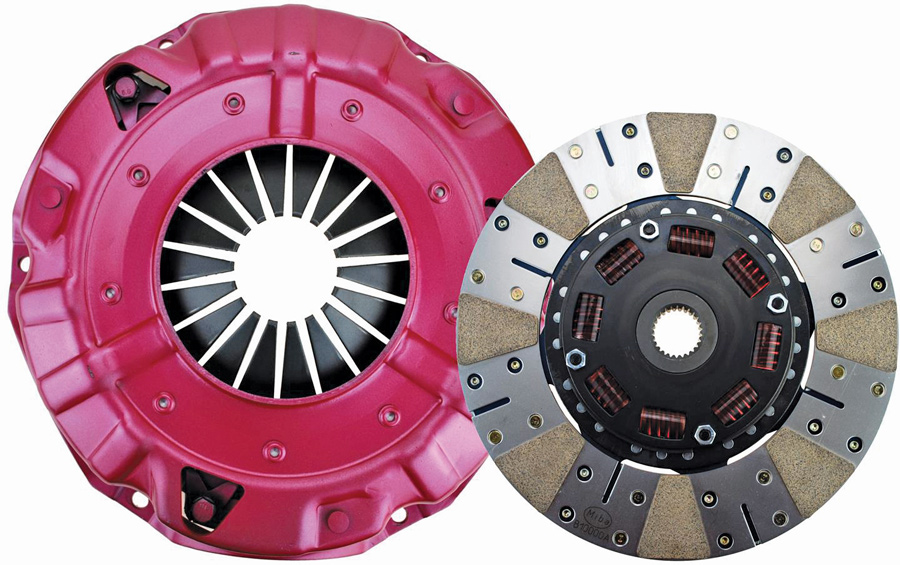
Another consideration when selecting a flywheel is choosing steel or aluminum. As the people at Ram Clutches explain it, the heavier steel flywheels store more energy than the lighter aluminum versions. Engine and gearing combinations that require more power or inertia to make the car launch without bogging need heavier flywheels. However, heavier steel flywheels accelerate slower so while aluminum flywheels create less inertia at launch, they will allow the engine to accelerate quicker through the gears. When choosing a flywheel, you must consider the car’s weight, operating rpm of the engine, and, most importantly, the gearing. For a heavy car with tall gears a steel flywheel is often the way to go, particularly if how the car launches from a standstill is a consideration, a lighter car with lower gears may benefit from a lighter aluminum flywheel for better acceleration.
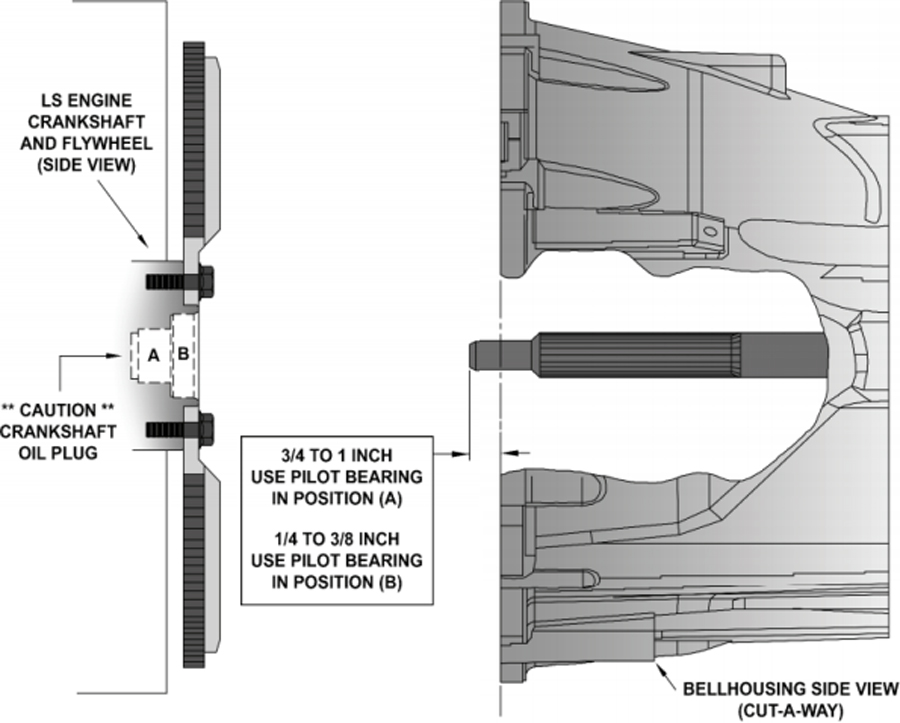
Be aware some GM LS engines use a press-in oil plug deep inside the crankshaft flange. Do remove an original pilot bushing with the “hydraulic” method (filling the cavity with grease then driving a round rod into the center of the bushing pushing it out) as the plug will be pushed into the crankshaft and a gigantic oil leak is the result.
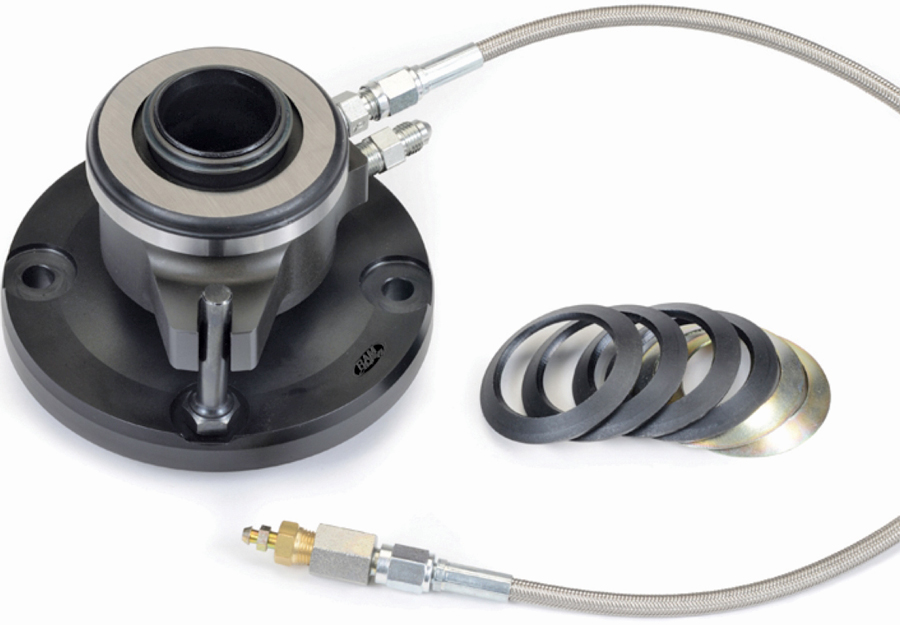
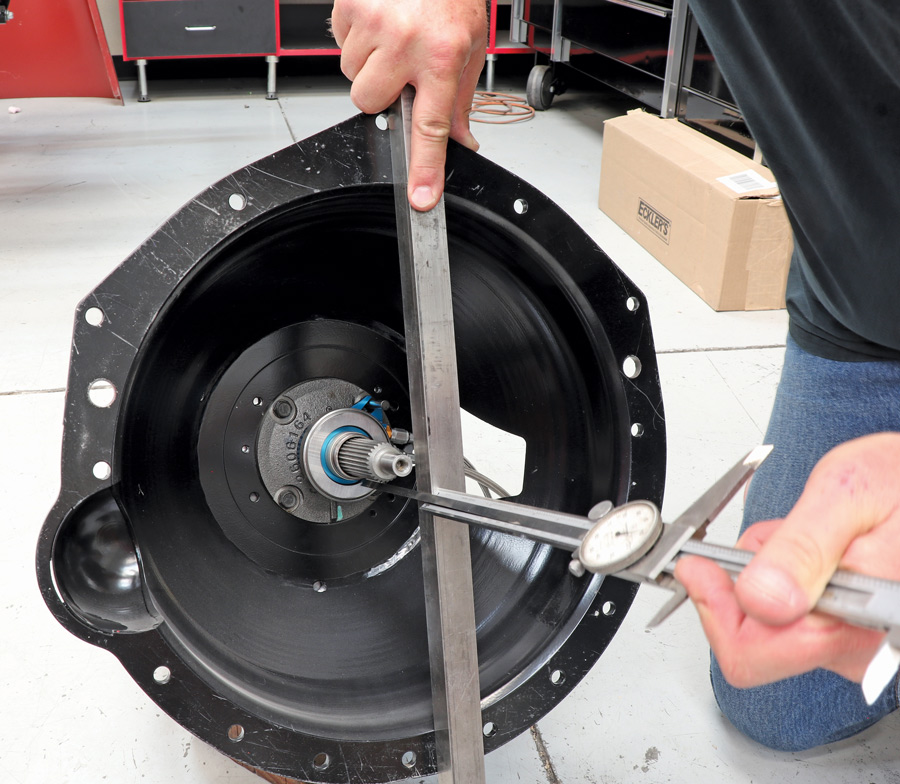
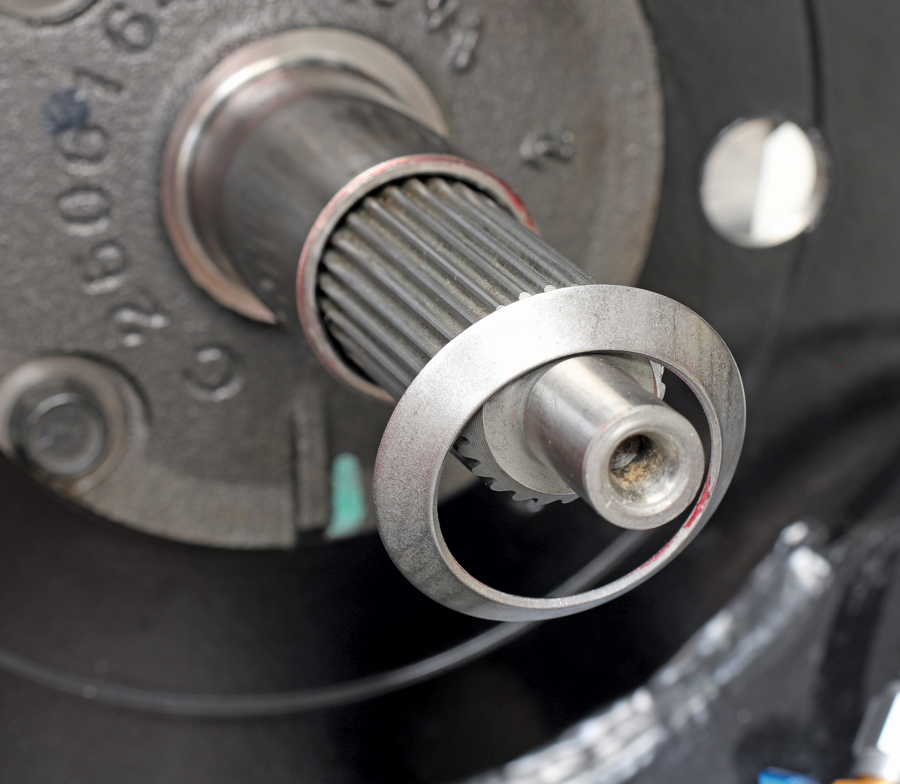
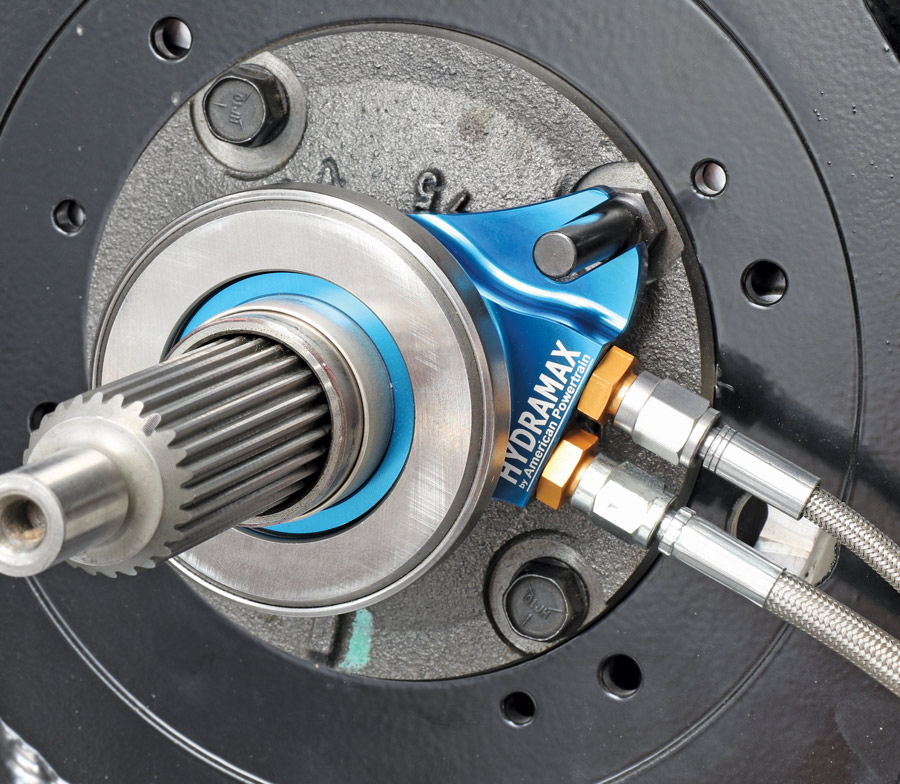
Installing the American Powertrain HydraMax hydraulic release bearing isn’t difficult, it’s simply a matter of positioning the assembly to be within 0.150 to 0.200 inch of the pressure plate fingers. This is done by measuring the distance of the pressure plate fingers from the transmission mounting surface on the bellhousing. A second measurement is taken from the transmission mounting surface to the face of the release bearing. It’s then a simple matter of adding shims behind the release bearing assembly to establish the proper clearance.