






1971 Plymouth Duster
Suspensions:
For a 1965 Ford
For a 1971 Corvette

Preview Issue






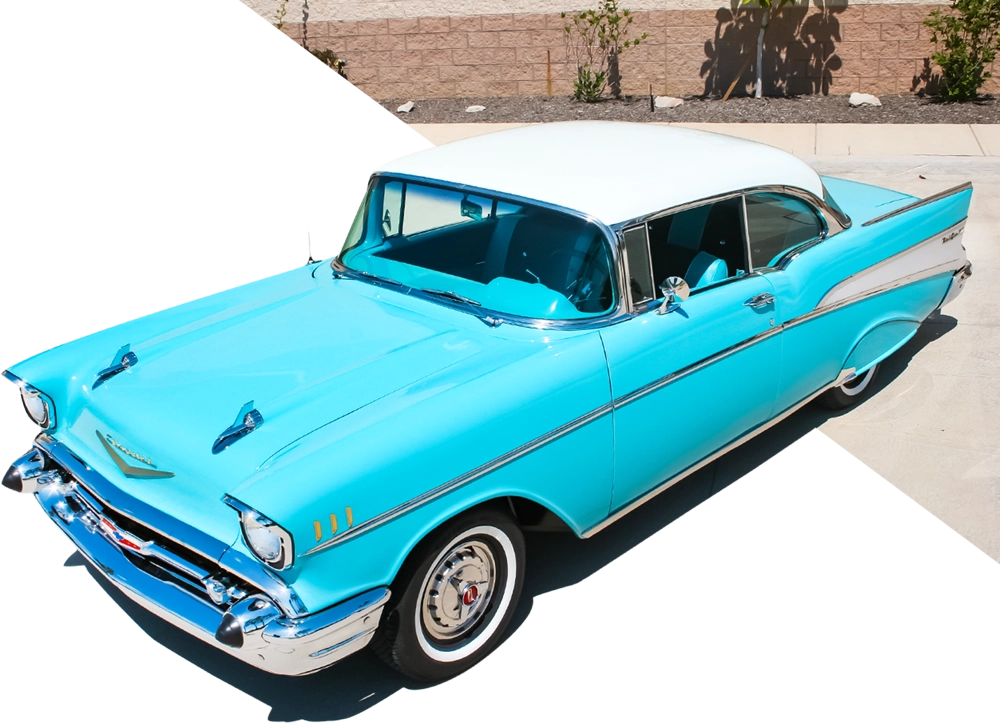


Experience precision and style with Flaming River steering columns. Elevate your driving experience with our cutting-edge technology and uncompromising quality. Transform your vehicle into a masterpiece of control and comfort. Check out Flaming River steering columns and steer your journey with confidence. Made in the USA!
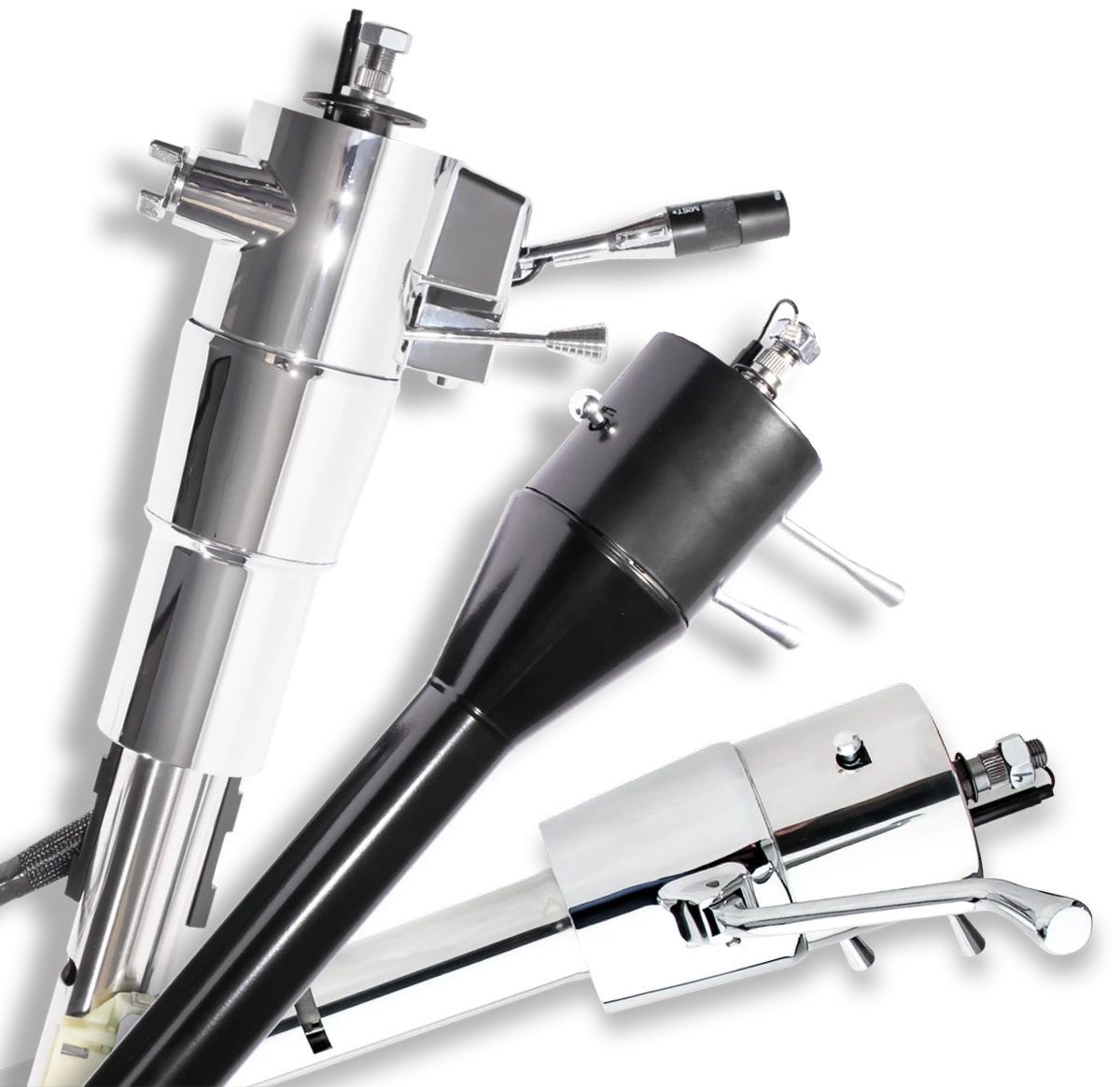

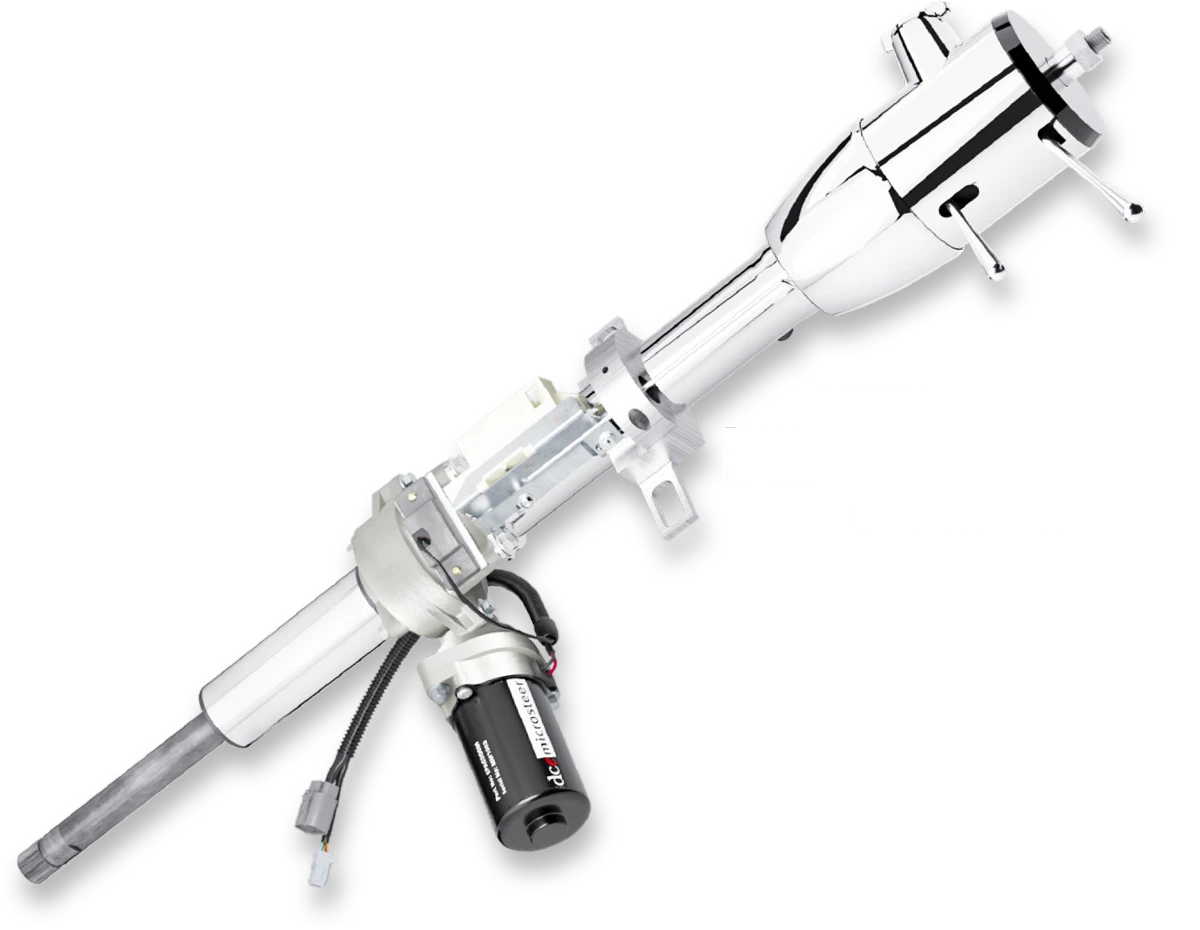
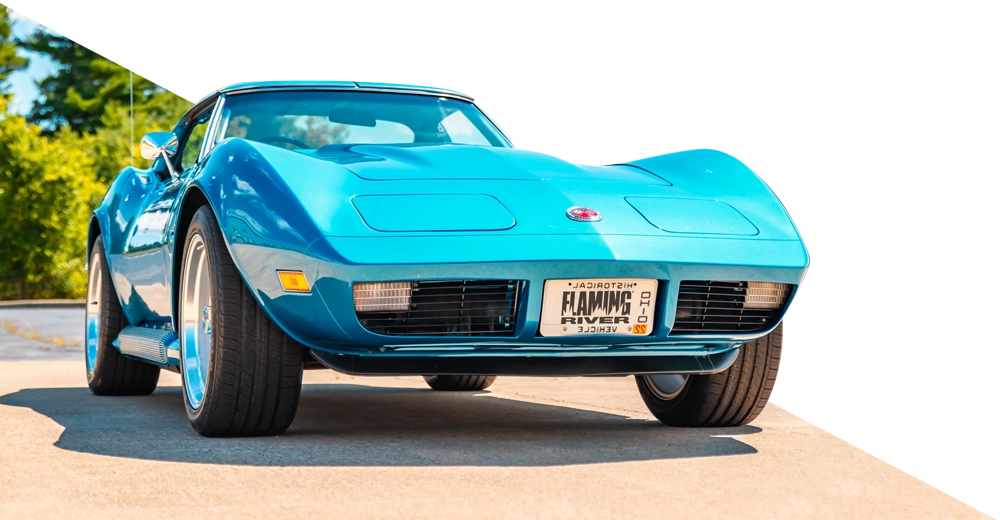
The Microsteer Electric Power Assisted Steering system is integrated into our Flaming River Tilt Column and can be used with the original 68-82 Corvette manual steering box. It’s a Direct Fit!

Experience precision and style with Flaming River steering columns. Elevate your driving experience with our cutting-edge technology and uncompromising quality. Transform your vehicle into a masterpiece of control and comfort. Check out Flaming River steering columns and steer your journey with confidence. Made in the USA!

The Microsteer Electric Power Assisted Steering system is integrated into our Flaming River Tilt Column and can be used with the original 68-82 Corvette manual steering box. It’s a Direct Fit!
The Microsteer Electric Power Assisted Steering system is integrated into our Flaming River Tilt Column and can be used with the original 68-82 Corvette manual steering box. It’s a Direct Fit!




Brian Brennan
Industry News
New Products
Those Supporting Our Industry
Brian Brennan
Cody Walls’ 1932 Ford Three-Window Coupe
By Curt Iseli, Photography by NotStock Photography
Candice Wheeler’s 1958 Pontiac Bonneville
By Grant Cox, Photography by the Author
Steve Moal’s 1932 Ford Highboy Roadster
By Brian Brennan, Photography by Michael Christensen
Rod Tinney’s 1968 Corvette
By Fuelish Media, Photography by the Author

Swapping a Ford Racing 7.3L V-8 Into Our 1965 Mustang
By Evan J. Smith, Photography by the Author & Brian Brennan
Part 2: We Complete Our C3 Corvette’s Suspension Upgrades With Detroit Speed’s DECALink IRS
By Barry Kluczyk, Photography by Brian Brennan
Part 2: Rear Suspension Updates for a Classic Mustang
By Ron Ceridono, Photography by Tate Radford
Fitting Fresh Sheetmetal Takes Know-How … and Patience
By Ron Covell










BRIAN BRENNAN
bbrennan@inthegaragemedia.com
TIM FOSS
tfoss@inthegaragemedia.com
YASMIN FAJATIN
yfajatin@inthegaragemedia.com
SARAH GONZALES
sgonzales@inthegaragemedia.com
ROB MUNOZ
rmunoz@inthegaragemedia.com
PATRICIA LUDI
pludi@inthegaragemedia.com
Gerry Burger, Tommy Lee Byrd, Ron Ceridono, Michael Christensen, Ron Covell, Grant Cox, Kev Elliot, John Gilbert, Ken Gross, John Jackson, Chadly Johnson, Barry Kluczyk, Scotty Lachenauer, Ryan Manson, Josh Mishler, Dale Moreau, Todd Ryden, Jason Scudellari, Chris Shelton, Tim Sutton, Chuck Vranas — Writers & Photographers
Travis Weeks Advertising Sales Manager
Patrick Walsh Sales Representative
ads@inthegaragemedia.com
ModernRodding.com
AllChevyPerformance.com
ClassicTruckPerformance.com
InTheGarageMedia.com
subscription@inthegaragemedia.com
(714) 985-9171
InTheGarageMedia.com “Online Store”
For bulk back issues of 10 copies or more, contact store@inthegaragemedia.com


Copyright (c) 2026 In The Garage Media Inc.
Printed in the USA.
The Modern Rodding trademark is a registered trademark of In The Garage Media Inc.

 By Brian Brennan
ack from SEMA, I have had time to reflect on the event and its significance in our automotive hobby. SEMA showcases numerous products that support current projects and pave the way for future endeavors. It makes me think about the companies that have shaped this industry from its inception to the present day.
Between 1953 and 1975, the hot rod world exploded, particularly in the late ’60s and early ’70s, as new manufacturers catered to the everyday enthusiast, providing the building blocks for both pride and performance on the open road. This era brought numerous innovations that transformed ordinary vehicles into high-powered machines. In my early years, I marveled at the factory muscle cars and began to explore the early hot rods my friends’ older brothers were obsessed with.
The 1950s marked the rise of “performance camshafts,” with Isky Racing Cams at the forefront. Their designs offered increased horsepower through advancements such as the 3/4 race cam and solid-lifter performance. The first off-the-shelf supercharger systems debuted in this era, with GMC’s 4-71, 6-71, and 8-71 blowers becoming staples in performance upgrades.
 BY BRIAN BRENNAN
 SEMA Battle of the Builders … 1936 Ford Roadster Takes Home Honors
This isn’t Trepanier’s first time competing in the Battle of the Builders; he previously won the title in 2017. This year, the 1936 Ford roadster competed in the Hot Rod/Hot Rod Truck category, one of many that drew a field of 40 possible winners. In the Hot Rod/Hot Rod Truck category alone, there was some incredible competition, rounding out the final three made up of the 1959 Chevy Impala owned by Eugene Bothello and built at BBT Fabrications under the watchful eye of Troy Gudgel, and a 1966 Corvette coupe built by Kyle Kuhnhausen, owner and accomplished builder of Kuhnhausen Metal Concepts.
The 1936 roadster appeared on the cover of Modern Rodding (Sept. ’25) and has been featured in numerous build articles. The following links will take you to many of those build stories:
https://bit.ly/4czMtsg, https://bit.ly/3zEitMV, https://bit.ly/4bzkmrw, https://bit.ly/4eUpHN1, https://bit.ly/3LekGl6, https://bit.ly/4cIPzdy.
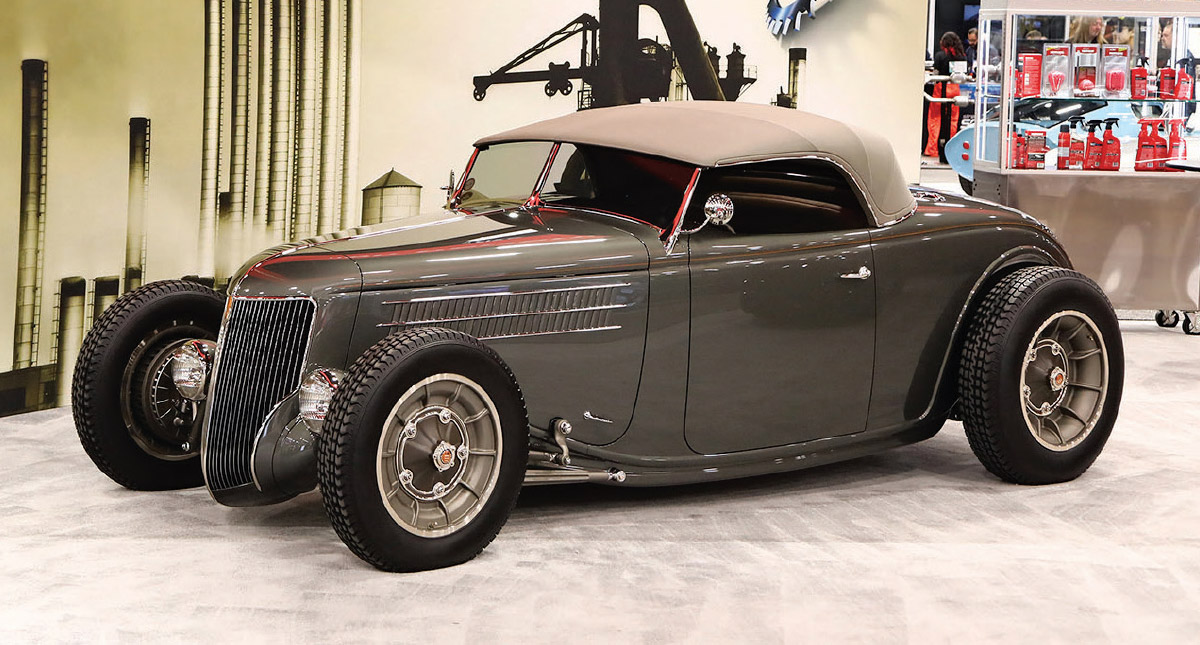
 The 1936 Ford roadster owned by the Myers and built at Rad Rides by Troy has won numerous awards, including the America’s Most Beautiful Roadster award, the Best Street Rod at the Triple Crown of Rodding, and now the SEMA Battle of the Builders. What’s next? Could it be the Barrett-Jackson Cup at the auction in Scottsdale?

fter walking the aisles of the 2025 SEMA Show, we spotted many cool items perfect for hot rod builds. With this in mind, we decided to showcase some of our favorite choices.
We checked with the manufacturers about the availability of all these products in stock or during the first half of 2026. We received a positive response, so you should be able to fulfill your wish list as soon as you wish.
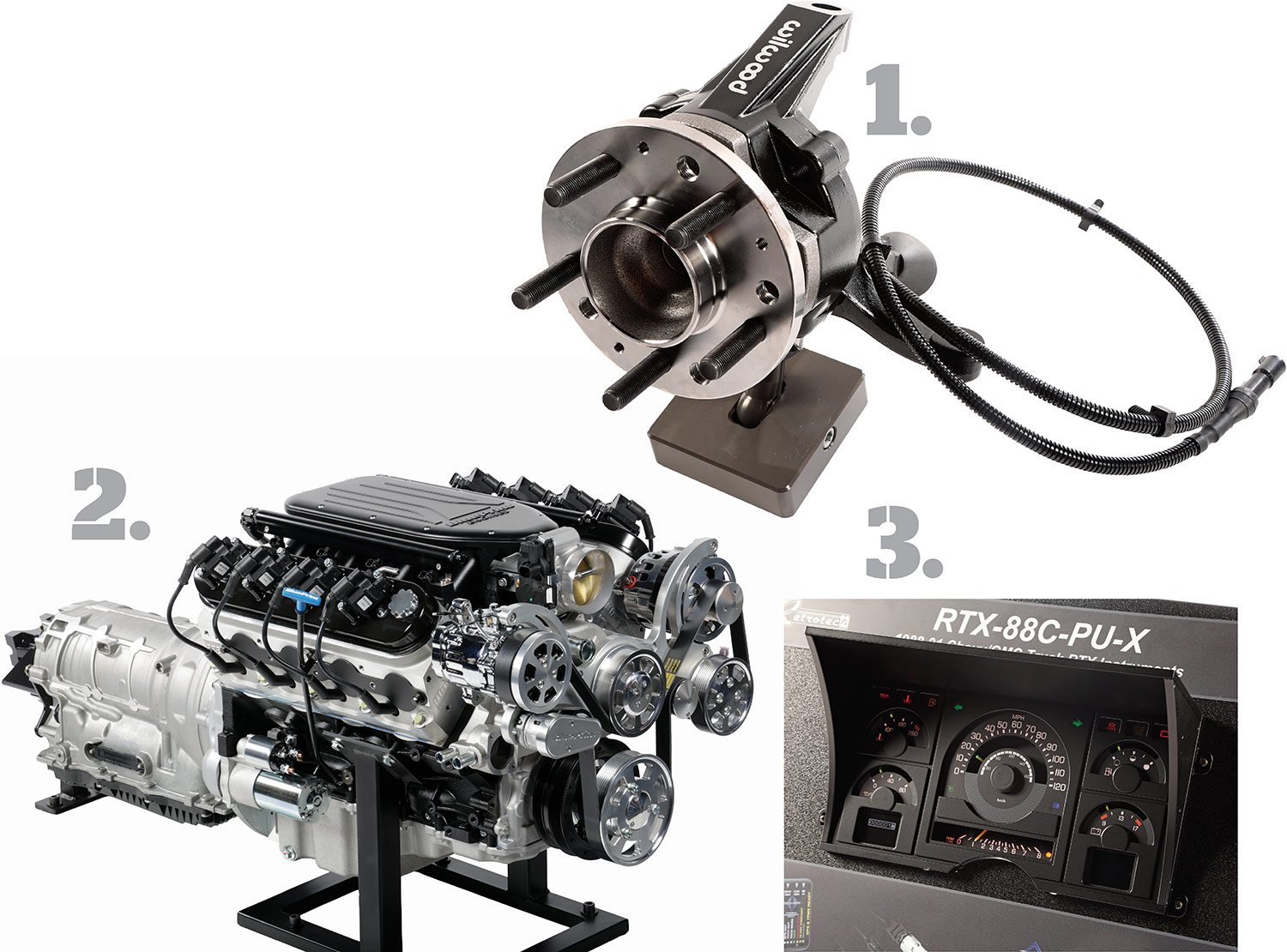
Runner-Up: 2-inch Drop, Aluminum, Bolt-in Hub ProSpindle Kit (PN 830-17728)
Wilwood’s new precision-engineered ProSpindle Hub Kit includes multiple enhancements. It offers a durable and safe way to improve handling and brake performance while matching Wilwood’s custom-fit brake kits for rotors from 12.19 to 15.00 inches. Additionally, it is ABS compatible, enabling the design of braking systems on older vehicles to include modern features.
For more info, contact Wilwood Disc Brakes by calling (805) 388-1188 or visit wilwood.com.





 Photography by NotStock Photography
s Cody Walls wheeled his radical 1932 Ford three-window into the host hotel’s lot at the Gathering at the Roc, he pulled alongside the recently restored “Little Deuce Coupe” and shut down the raspy straight-six. Though built nearly 70 years apart and drastically different in their modifications, the two looked right at home side-by-side—like fraternal twins from hot rodding’s brief but electrifying show rod era. That wasn’t by coincidence.

 Photography by THE AUTHOR & Brian Brennan Illustrations Courtesy of
 ost enthusiasts agree that it was surprising to see Ford unveil a new pushrod V-8, given the Detroit automaker’s over 25 years of focus on overhead-cam V-8 technology. We’re talking about Ford’s 7.3L Godzilla, which is offered in Super Duty trucks and has recently been finding its way into hot rods and race cars.
What makes it so surprising is that over the past three decades Ford has developed the modular family of engines that include two-, three-, and four-valve options. These engines deliver excellent power, efficiency, and dependability. Currently, the 5.0L Coyote and its variations (such as those in Shelby G.T. 350, G.T. 500, and Raptor R) are industry leaders. The last pushrod V-8 was the 5.0L small-block, originally popular in the Fox-body Mustang. A version of that engine continued to be used in the Ford Explorer until around 2001 when modular engines replaced it.


 Photography by THE AUTHOR
ome people are born into the car hobby, others discover it along the way. For Candice Wheeler, the passion has always been there, especially when it comes to big-body American muscle.
“I’ve always loved the size and style of the late-’50s and early-’60s cars,” Candice says. “They just have this personality that stands out from everything else.”


1. The Detroit Speed DECALink for our C3 Corvette (1971) supplies a substantial number of components, and to this you will need to add your third member as well as braking and the appropriate lines.

Part 2: We Complete Our C3 Corvette’s Suspension Upgrades With Detroit Speed’s DECALink IRS
Photography by Brian Brennane’re back in Phoenix at Hot Rods by Dean for the next part of our C3 Corvette project: the rear suspension and brakes. In our last visit, we installed Detroit Speed’s SpeedRay coilover front suspension and rack-and-pinion steering systems, along with a big set of Wilwood brakes. We’ve returned to both companies for the rear, with Detroit Speed’s DECALink independent rear suspension and matching rear Wilwood brakes, including an electronic parking brake.
The suspension is the core of the issue, and like the frontend conversion, replacing the C2/C3’s transverse leaf springs and three-link axle positioning with the DECALink’s 10-point independent design and unique geometry promises major improvements not only in cornering and handling but also in ride comfort. This is because all the lateral and trailing links, as well as the toe links, can be adjusted, making camber and toe adjustments relatively straightforward. Even the rear antisquat geometry and roll-center height are adjustable—and in the case of our project system, it features double-adjustable coilovers, too.
Another important note: In the stock rear suspension design, used from 1963-82, the large, thick half-shafts—connected via U-joints at both ends—effectively acted as upper control links, which worked well enough in corners but not so much for comfort. That has all changed with the DECALink setup, as the 10-link design relieves the half-shafts of that burden. There are no U-joints anymore, since CV joints provide a greater range of motion.

 Photography by Michael Christensen
here are homebuilt and shop-built hot rods, and the debate over which one is more “hot rod” will always persist. Before you is an excellent example of what can happen when one hot rodder’s talents are so broad that he can do everything himself at a level that exceeds the traditional homebuilt and shop-built hot rod. Steve Moal, of Moal Coachbuilders in Oakland, California, is a remarkable homebuilder and professional shop owner. Let’s take a look at his personal ride, a classic-style 1932 Ford highboy roadster with just the right amount of personal touches and incredible engineering. It is the ninth in a line of “Roadchamp 32s.”

 Photography by Tate Radford
ince the beginning of hot rodding (or roughly the same length of time Brennan has been involved), most enthusiasts have focused on improving their vehicle’s performance. Their typical goals include more powerful engines, better suspension, and improved brakes. For Colin Radford of Radford Auto, these are also his goals and the reasons behind the modifications to his 1965 Ford Mustang fastback. So far, we’ve followed the installation of the new front suspension from Classic Performance Products. Last month, we showed how he assembled a completely new fabricated 9-inch rear axle assembly from JEGS. This time, we caught up with Colin as the ponycar’s rearend received all-new suspension components.
To replace the original springs and shock absorbers, Colin chose a four-link suspension kit from JEGS (PN 555-64650) with coilover shocks. Designed for rearend housings with 3-inch axle tubes, these four-link kits come with 1/4-inch-thick housing and frame brackets, four-link bars, threaded inserts made from 4130 chromoly steel, and 5/8-inch rod ends. The axle brackets also serve to mount coilovers and are drilled to accept an antiroll bar.


 Photography by THE AUTHOR
hen you’re a helicopter pilot who picks up astronauts after splashdown, it can be hard to find a new thrill. The adrenaline rush tends to fade when your daily job already provides excitement, but Rod Tinney of Burleson, Texas, discovered a fresh thrill with a one-of-a-kind 1968 Corvette monster called the ZRT. This five-year project involved extensive engineering and fabrication, resulting in a 200-mph-capable car packed with show car details both inside and out.





 Photography by BBT Fabrications
Fabrications has built quite a reputation for creating over-the-top performance car projects. For this project, they are building a car for their customer Jordan Dustin, featuring a Chrysler Hellcat engine that they squeezed into a 1971 Plymouth Duster.
They found a very clean-looking car to start with, which appeared great in its shiny white paint. It was only after beginning to strip the car down to bare metal that they discovered how little of the body was salvageable. Rust damage and poorly executed repairs were evident on most of the lower body panels. Fortunately, there is a good supply of aftermarket body panels available for this model, and they made careful decisions about which panels to repair, and which to replace with reproduction panels from Auto Metal Direct (AMD). The photos will give you a good idea of what it takes to properly repair a sad example like this one.
The original Duster had a unibody chassis design, meaning that only sheetmetal connects the engine and drivetrain to the rear wheels. While this worked fine for the original 340ci engine with 275 hp, it really isn’t up to the task of handling the blown Hellcat 6.2L engine pumping out 717 hp.




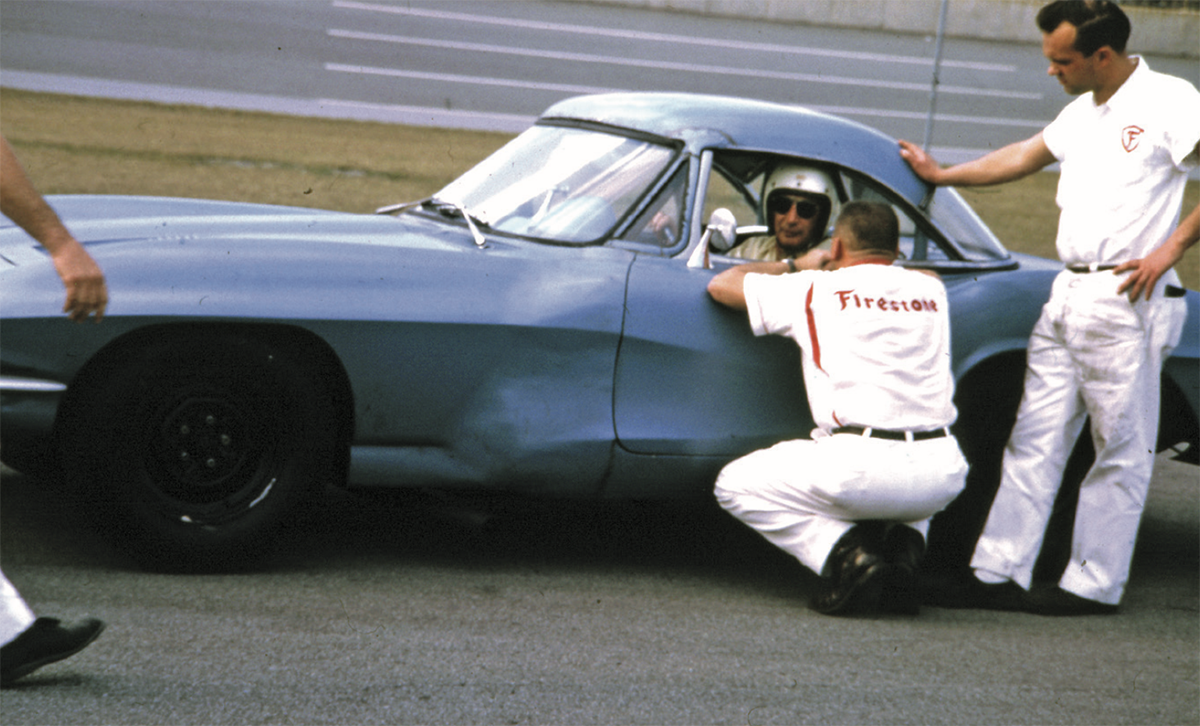 A rare color photo of a 1962 and a 1963 Corvette (test mule), showing half of each, is displayed here at Daytona International Speedway during suspension and tire testing. Although it’s hard to tell that Zora Arkus-Duntov himself is behind the wheel, he appears to be discussing tire performance data (we suspect) with a Firestone engineer.
 In this photo, you can clearly see that the rear section of a 1962 Corvette is used along with the new front half of a 1963 Sting Ray. Notice the “cast and camber” of the rear wheel and tire combo, which is tilted inward, hinting at the new independent rear suspension that would be introduced on the production C2 Corvettes. By Brian Brennan
t was about 10 years ago when I was working on a historical Corvette piece with noted Corvette historian and collector of some incredibly rare Corvettes, Franz Estereicher, who told me about the half 1962, half 1963 Corvette. It was photographed at Daytona International Speedway by Jerry Titus, an accomplished race car driver and well-known automotive journalist.
The following is something we were working on but never got around to doing anything with—so here goes.
The Nov. ’62 issue of Sports Car Graphic featured an article on Chevrolet’s new 1963 Corvette, along with a captivating photo of a “test mule” that captured everyone’s attention. What exactly was it—a 1962 or 1963 Corvette? It was a blend of both, captured in January 1962 at Daytona International Speedway during engineering tests of “heavy-duty” components, with particular focus on the new forward adjusting braking system. The image revealed significant upgrades, including: 1. The “cast and camber” of the rear wheels with an inward tilt, showcasing the all-new independent rear suspension; 2. The 1963 frontend design with unique hood grilles; 3. The revised windshield design; and 4. The rear clip from the 1962 model.
View Index
- AFFORDABLE STREET RODS
- AMERICAN AUTOWIRE
- ART MORRISON ENTERPRISES
- AUTO METAL DIRECT
- AUTOMOTIVE RACING PRODUCTS
- BOWLER PERFORMANCE TRANSMISSIONS
- CHAMPIONSHIP AUTO SHOWS
- CLASSIC INSTRUMENTS
- CLASSIC PERFORMANCE PRODUCTS
- CLASSIC PERFORMANCE PRODUCTS
- DAKOTA DIGITAL
- DETROIT SPEED
- EATON DETROIT SPRING, INC.
- FITECH EFI
- FLAMING RIVER INDUSTRIES
- FLAMING RIVER INDUSTRIES
- GOLDEN STAR CLASSIC AUTO PARTS
- GOODGUYS ROD & CUSTOM ASSOCIATION
- GRANATELLI MOTOR SPORTS, INC.
- HAYWIRE
- HEINZMAN STREET ROD SHOP
- HOT HEADS RESEARCH
- LOKAR
- LOKAR
- NATIONAL STREET ROD ASSOCIATION
- NEW PORT ENGINEERING
- PHOENIX MACHINE PRODUCTS
- POWERMASTER PERFORMANCE
- PURE CHOICE MOTORSPORTS
- RARE PARTS
- RJAYS SPEED SHOP
- ROADSTER SHOP
- ROD SHOWS
- ROD SHOWS
- SALTWORKS
- SCOTT’S HOTRODS
- STEVE’S AUTO RESTORATIONS
- TRIPLE CROWN OF RODDING, LLC
- WHEEL SMITH
- WILWOOD ENGINEERING
- WINTERS PERFORMANCE
