
 Photography by Josh Mishler
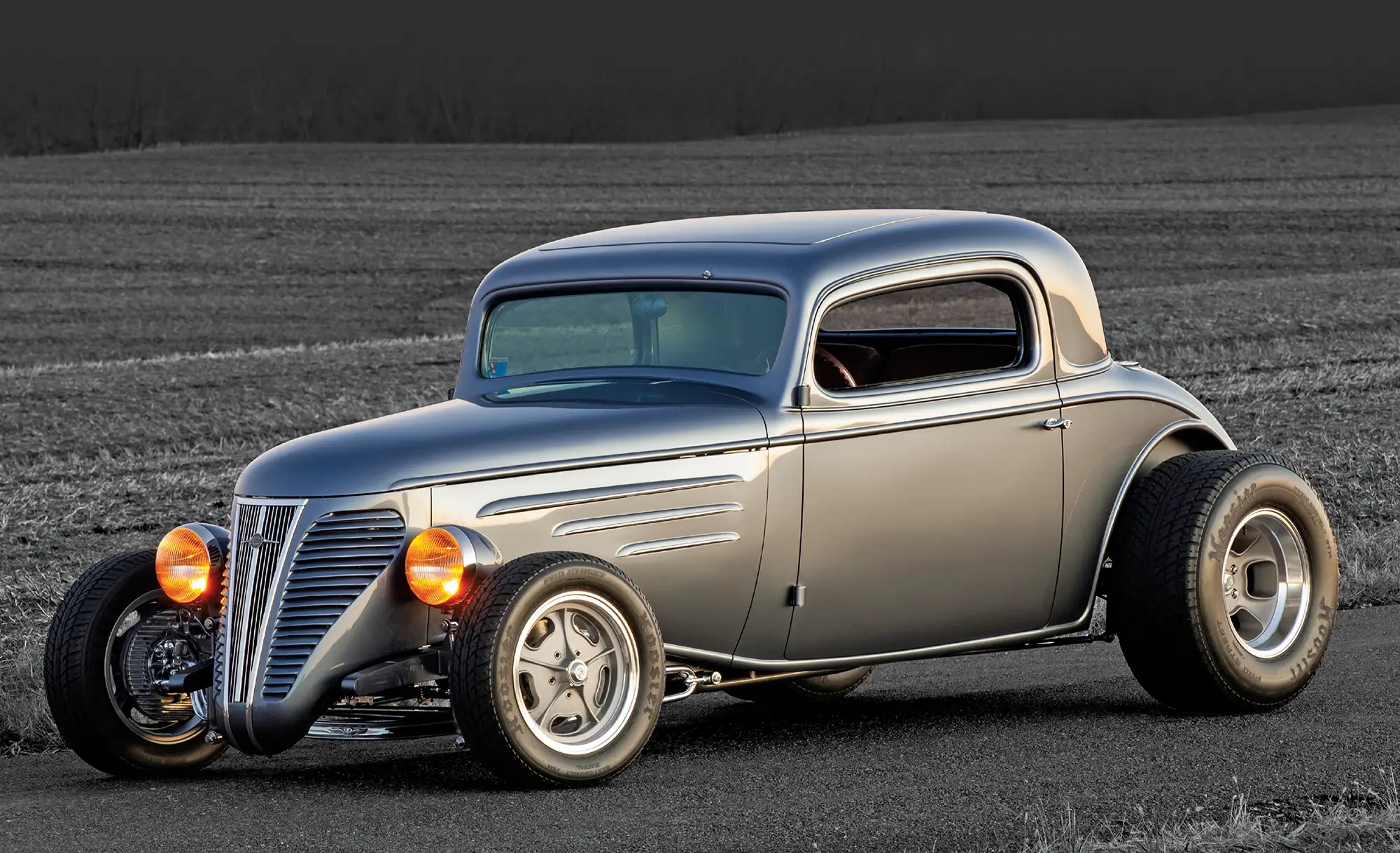
hen we talk about hot rods from the 1930s, we often think of Fords. There’s little doubt that mid-’30s Fords are more popular as hot rod material compared to Chevrolets. However, when he built his 1935 Chevy Standard three-window coupe, Dale Brown hit the proverbial mark.
Sometimes, we all need a “push” to get started or to finish our hot rod project. Dale was no different, and thanks to his wife, Kathy, he received the necessary nudge. We assume it was one winter night when it was cold outside and they were sitting around talking when Kathy asked, “What’s holding you back?” That was the jumpstart Dale needed to pursue his 40-year-long dream of building a 1935 Chevy Standard three-window coupe. He tells us that he had designed the hot rod at least 100 times in his head but never “pulled the trigger,” so to speak. Yet here he was in his retirement years when it all came together. With help from his hot rod friends, Bobby Schumacher of Vintage Fabrication (VF), and crew, they brought the Chevy coupe to life. Listening to Dale gives us a chuckle as he explains, “The Vintage Fabrication team took my ideas, and in some cases added to them, and in some cases threw them out.” No doubt, Dale, along with Schumacher and his crew, were on a roll, the same page, and could laugh about how it all came about.

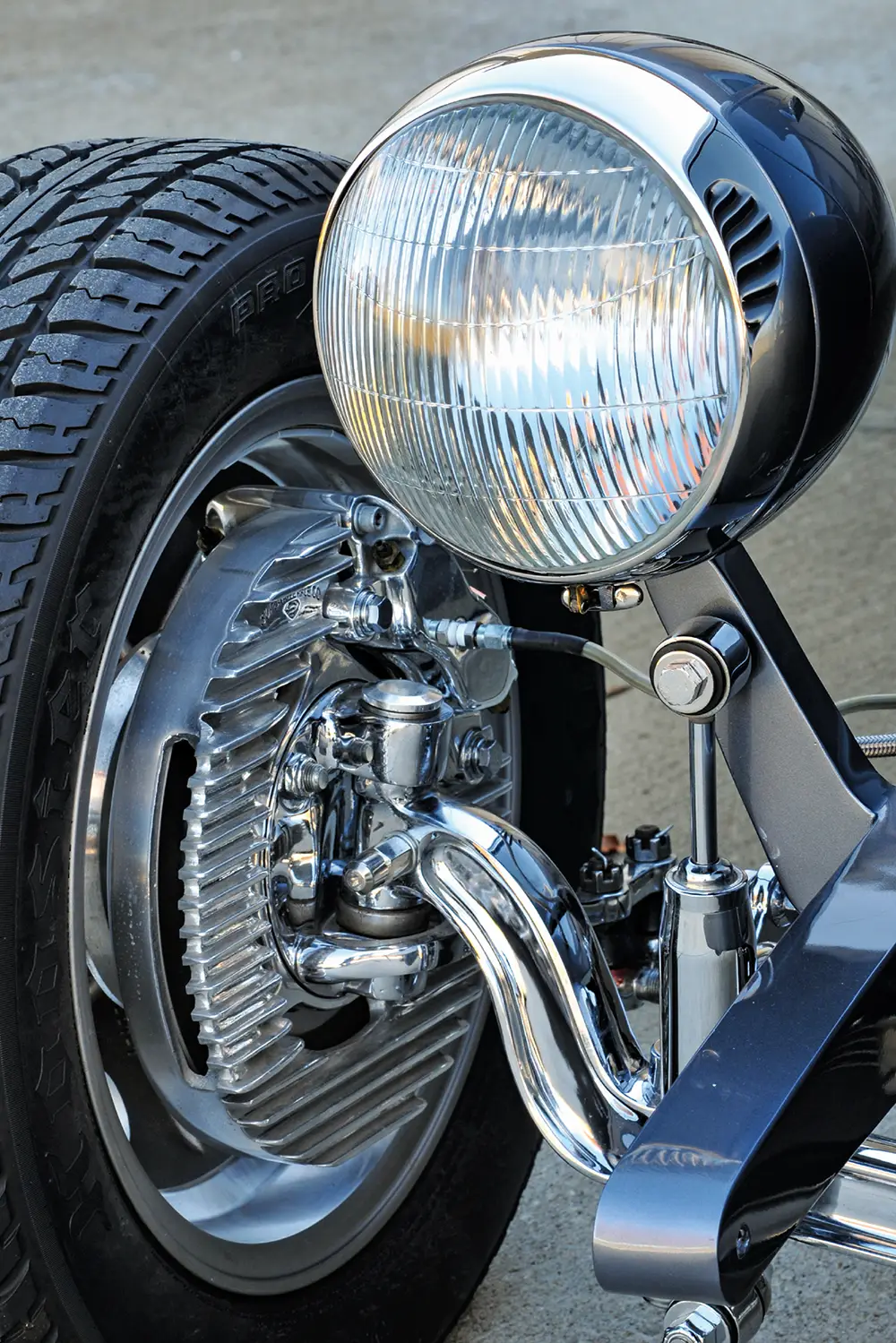
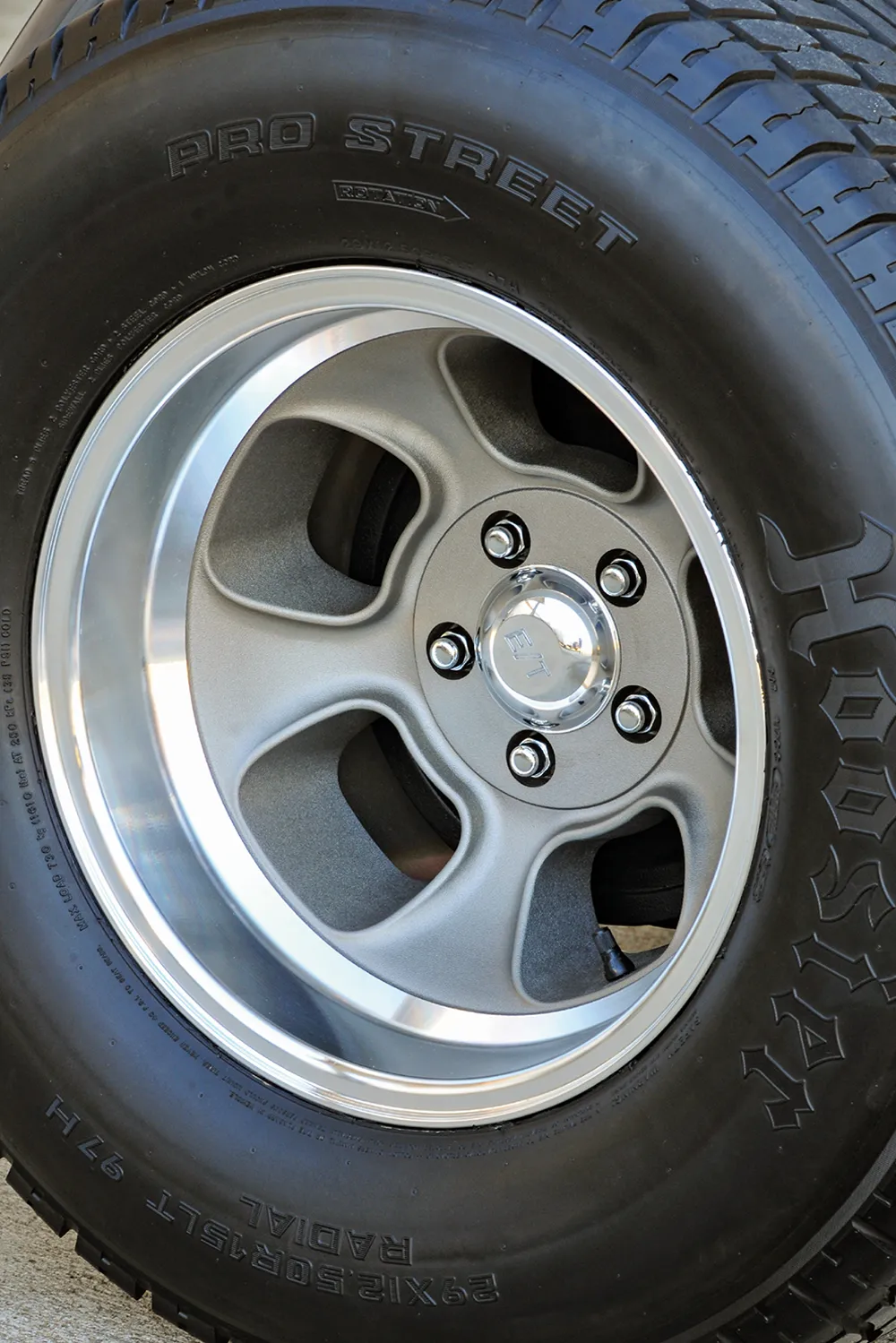
The VF custom framerails extend the stock wheelbase from 107 to 110 inches; VF also designed a custom 15-gallon gas tank. The front suspension uses traditional hot rod components, featuring a chromed Super Bell I-beam axle along with Pete & Jakes spindles, tube shocks, and hairpins. The steering system is based on the reliable Vega box, while the braking system includes a pair of Pete & Jakes Super Stoppers, equipped with Wilwood Dynalite calipers and rotors along with finned backing plates. The rear suspension is centered around a Ford 9-inch rearend with Strange Engineering axles and a Gears Unlimited driveshaft, complemented by Pete & Jakes ladder bars, coilover shocks, and a Panhard bar. The rear braking features 11-inch Ford drums, while the entire system uses a Wilwood master cylinder and OTB reservoirs to hold the necessary fluids. You can find ET Dragmasters, 15×5 in front, cast centers with polished lips, and Hoosier Pro Street 25×7.50R15LT rubber. More Hoosier Pro Street tires, measuring 29×12.50R15LT in the back, are mounted to E-T 15×10 five-window high-angle slotted mags.


The intake features an Edelbrock Air-Gap manifold, and a Holley Sniper II EFI throttle body has been added. An MSD Pro-Billet Flat-Top distributor, an MSD box, and Taylor wires, along with a pair of Powermaster components—a starter and alternator—were used to supply power to the plugs. The spent gases exit through a pair of Sanderson block-hugging shorty headers that connect to 2-1/2-inch exhaust pipes, which are ceramic coated and wrapped with DEI material and a shield. A Coan Engineering–prepped Turbo 400, complete with its 2,300-rpm stall speed converter and a Gennie shifter, transports the power back to the rear. One note: the air cleaner evokes a time long past; it recreates the Turbo Jet 425hp 396. This original big-block V-8 was notable as a remarkably powerful BBC.

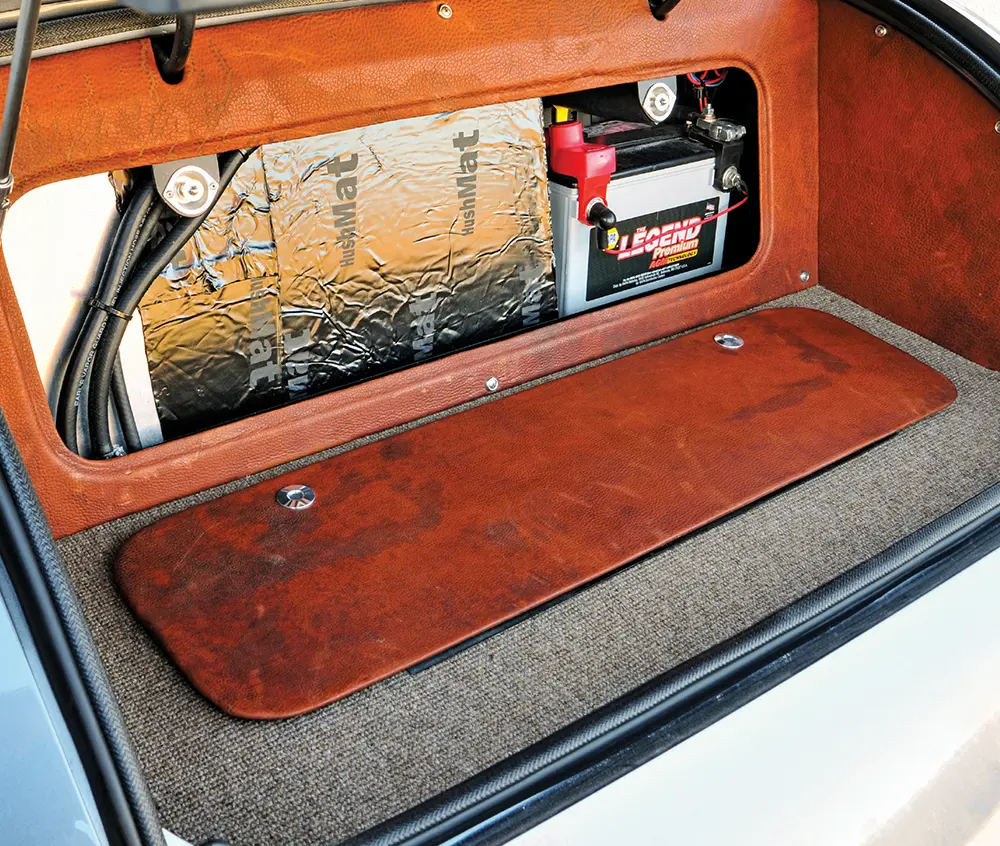
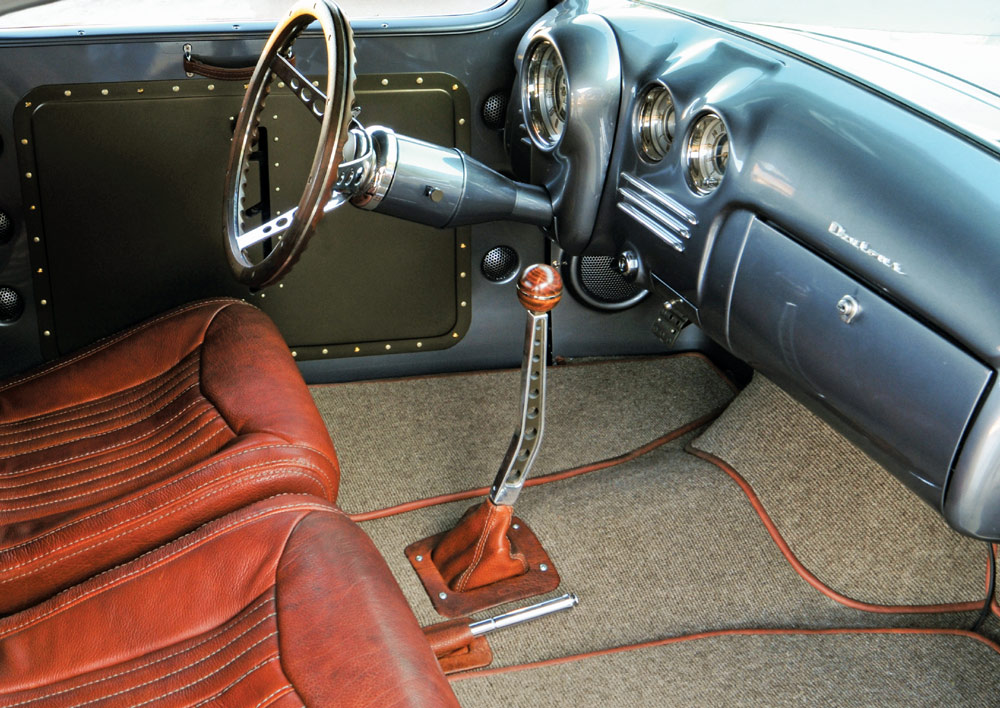
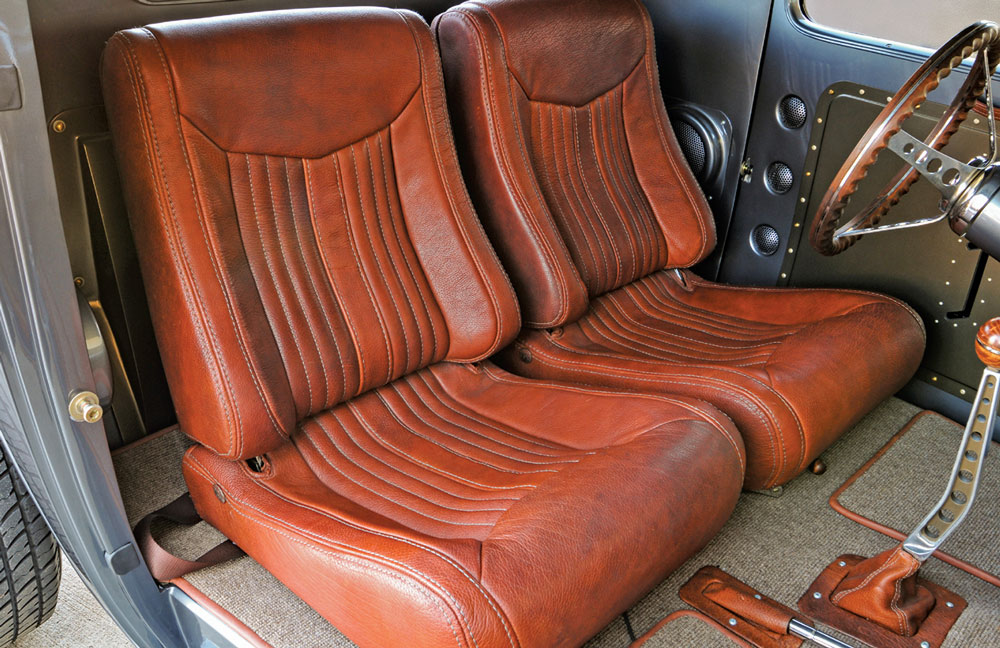
Inside, the 1935 Chevy coupe is an interesting choice for a dashboard as it uses a 1949 Buick modified to fit. From here, the Buick gauges were restored and reused, giving the car a cool retro look and something out of the ordinary. Wiring the gauges and the Vintage Air A/C system is an American Autowire Power Plus 20 by Derick Kurtz of Vintage Air. The 1949 Buick dash is fitted with a late-model GM-style tilt column with an N.O.S. 1960 S 500 Superior Performance Products wood steering wheel. The headliner is a steel insert. Now, look closely at the door panels, which are two-piece steel panels. The buckets are stitched in rust-colored buffalo hide by VF and utilize two-point lap belts. The carpeting is Apex Ultra square weave and is trimmed in matching seat color piping.
It may have taken a lifetime of dreams before Dale began his dream—this 1935 Chevy Standard three-window coupe—however, once underway, it took eight meaningful years to complete, though we can all agree this was time well spent.