
Modern Rodding Feature
InTheGarageMedia.com
By Brian Brennan Photography by NotStock Photography
What Could Have Been typography

This Current-Day 1966 Corvette Shows What Can Be

C2

Corvettes are always popular. It was a time of potent big-blocks surrounded by all manner of small-blocks. This 1966 Corvette began as a 427 big-block, four-speed coupe driven hard as a drag car from the late 1960s through the late 1970s. Allen Fortner of South Carolina was very familiar with the car as it was owned by his future brother-in-law David Horne who even taught his sister, Pam, how to drive a stick in this C2. Fast-forward, current owner Allen and now his wife Pam have brought this 1966 Corvette back to its former glory … and then some.

Well, that was then, and time continued to march. Some 50-plus years later, a seller and Allen’s paths cross while at his used car lot. (He grew up on car lots as that was his dad’s business.) This individual tells Allen he knows where the old 1966 Corvette was located—sitting outside and rotting away. As luck would have it, it was nearby, some 20 miles away, but it was in rough condition, having sat outside for 30-plus years. Nearly everything was missing, but Allen could tell this was Horne’s big-block Corvette.

Allen tells us this is how the story went: “I ended up purchasing it with the intention of restoring it to its original condition. That was my plan until I began chatting with Chris Ryan at Ryan’s Rod & Kustom. I spent years hanging out in [Ryan]’s shop, observing the impressive projects he was working on and their progress. [Ryan] has built several cars for me and completed high-end customs and Pro Touring vehicles. He has even created Ridler contenders and is now a member of the Kustom Car Hall of Fame and the Starbird National Rod and Custom Hall of Fame. He suggested some minor modifications and mentioned that we might consider pursuing more of a Pro Touring restomod approach. From there, the project took off! It has evolved into something much cooler than we initially envisioned and is far more comfortable to drive.”

The powertrain is based on an LS3 6.2L (378 inches) featuring an aluminum block and cylinder heads. Internally, the V-8 has retained its primary stock innards, but adding a Texas Speed camshaft coaxes a bit more power. To add to the appearance and performance aspect, an Inglese eight-stack injection system utilizes a Holley ECU (an Optima YellowTop battery provides the spark). Topping off the cylinder heads are polished Billet Specialties coil covers. The exhaust manifolds are made from Sanderson headers dumped into 3-inch tubes that run back to a pair of Flowmaster mufflers. To the V-8 is a 4L65E overdrive trans that utilizes a Lokar Performance Products floor-mounted shifter. A Rick’s Tanks gas tank carries the required gas for those short and long trips.
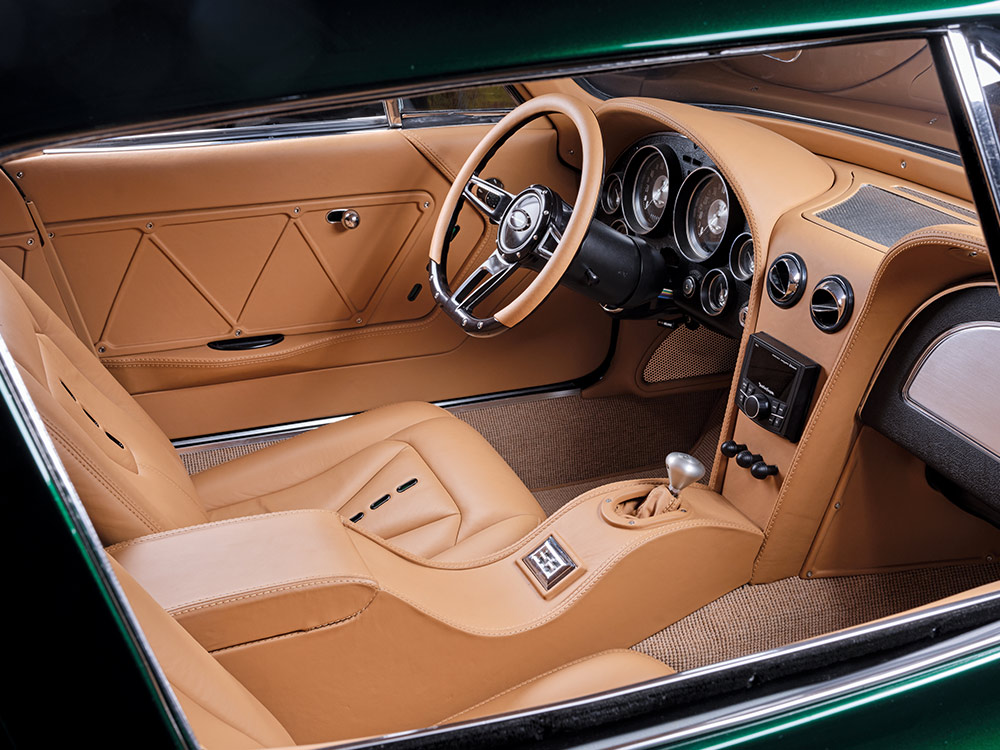
Interior view of a 1966 Chevrolet Corvette Stingray featuring tan leather seats and a custom dashboard
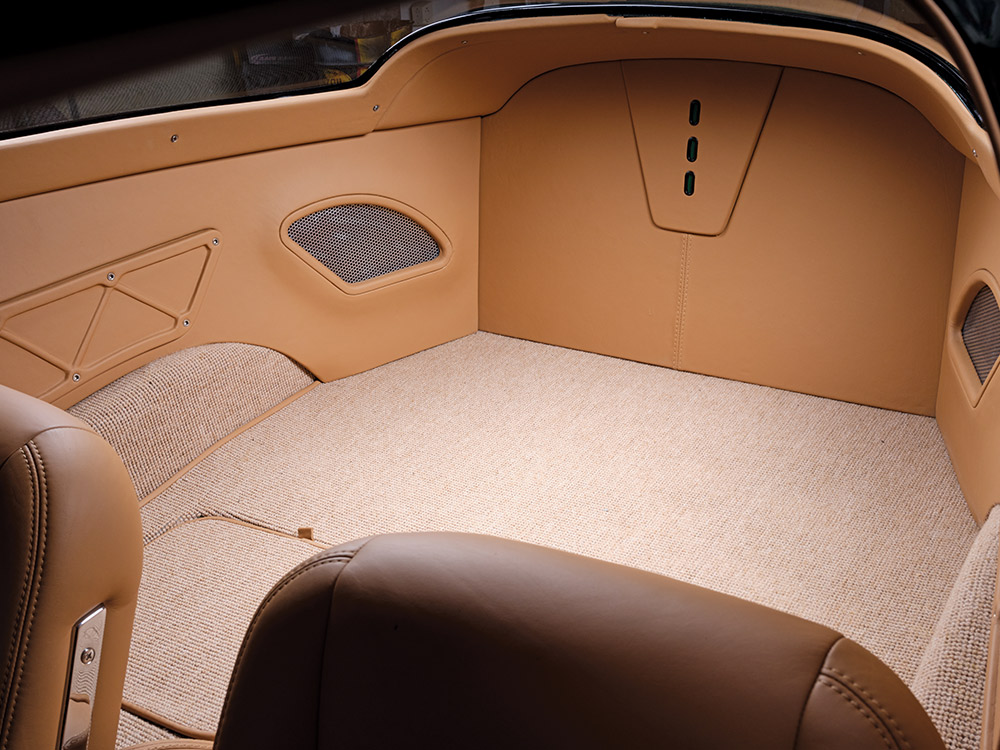
Rear compartment area of the 1966 Chevrolet Corvette Stingray, with tan leather and custom carpeting
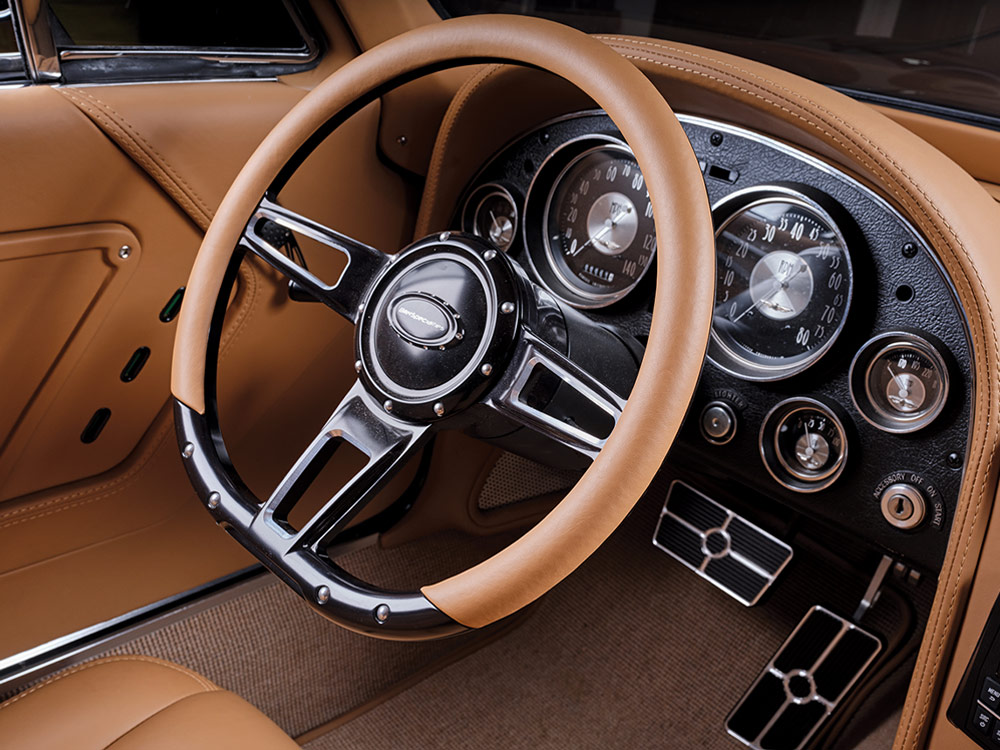
Close-up of the 1966 Chevrolet Corvette Stingray’s steering wheel and instrument cluster, featuring vintage dials
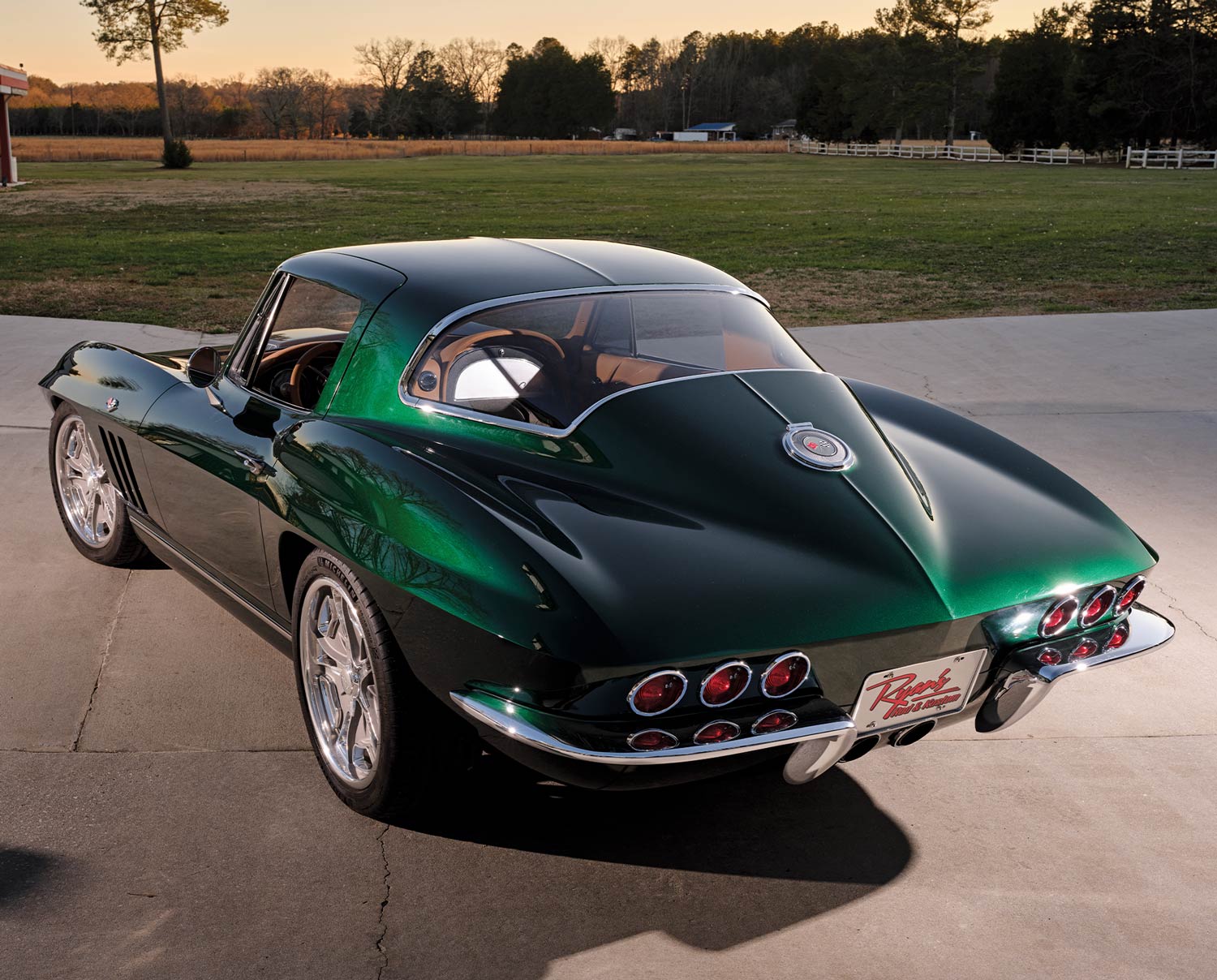
Angled rear shot of a 1966 Chevrolet Corvette Stingray, showcasing its sleek body lines under the evening light
The chassis is based on a Corvette frame and features many Ridetech goodies, including HQ Series coilovers, a front TruTurn system, rear StrongArms, and a front MuscleBar. The StrongArms feature upper ball joints that have been moved back to allow for additional caster settings to improve high-speed stability and steering feel. The lower StrongArms have also dropped lower shock mounts to increase suspension travel while moving the lower ball joint forward to increase caster settings while keeping the wheel centered in the wheel opening. The TruTurn system includes new spindles (suited for 1967-1969 Camaro brakes) that add negative camber to maximize tire contact patch during cornering. It also provides steering arms, a centerlink adapter, tie rods, and adjusters to eliminate bumpsteer virtually, correct Ackerman angle, and allow wider tires. The HQ Series coilovers allow for fine-tuning of the ride, whether highway or autocross driving. These shocks will also allow for adjustable ride height and a lowered stance from 1 to 3 inches. The Rear StrongArms allow for increased tire size and account for adjustable coilover shocks. This Corvette also uses the rear MuscleBar Sway Bar intended for track performance by accounting for big horsepower and WIDE tires.

A Borgeson power steering box guides the one-off wheels and sporty rubber. Hiding behind the one-off Curtis wheels are Wilwood six-piston calipers in front and four in back. The master cylinder and pedal assembly are more Wilwood. The wheel and tire combination comprises Curtis Speed one-off wheels measuring 18×8 and mounted with Michelin 245/40R18 at the corners.
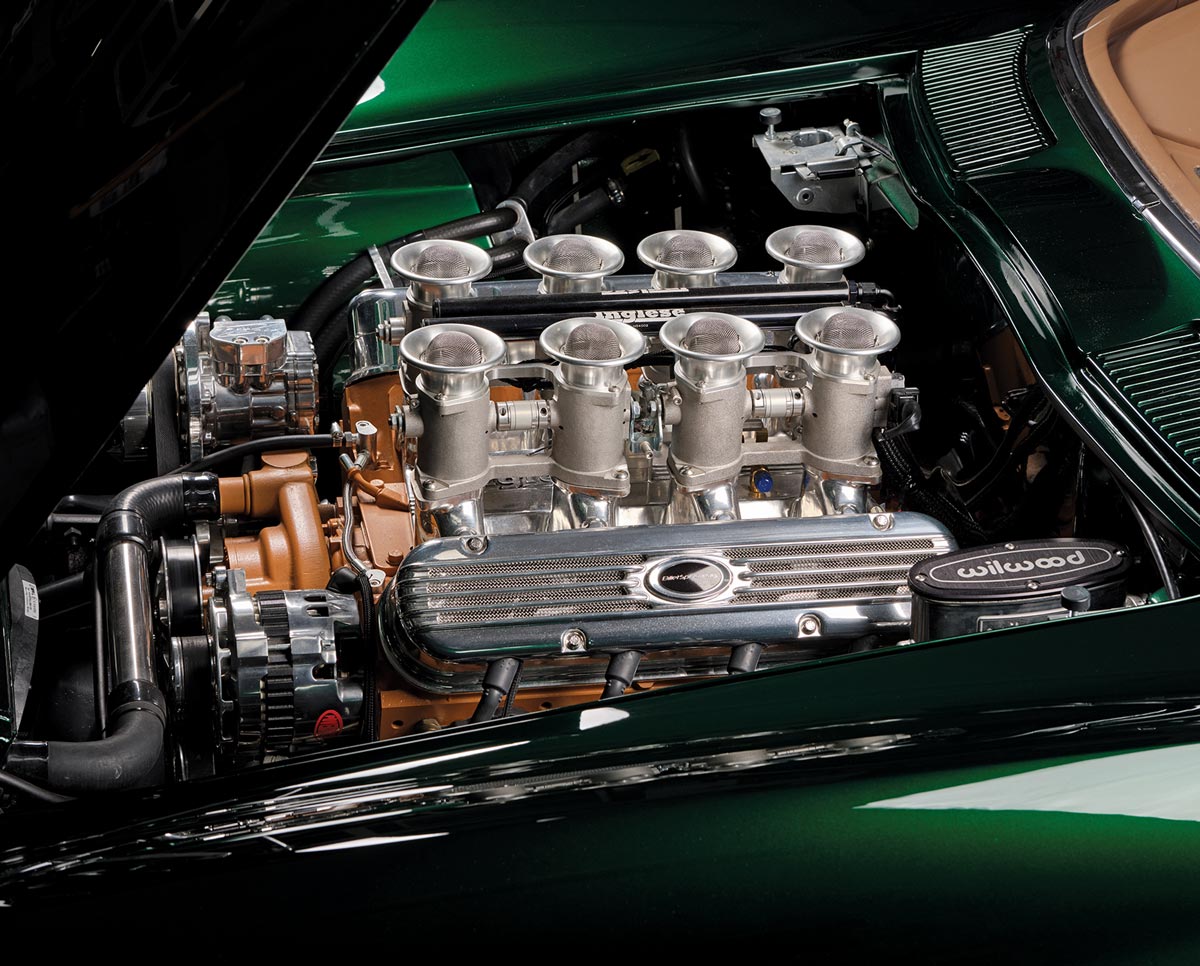
Side view of the 1966 Corvette Stingray's engine, showcasing the detailed work and Wilwood brake components
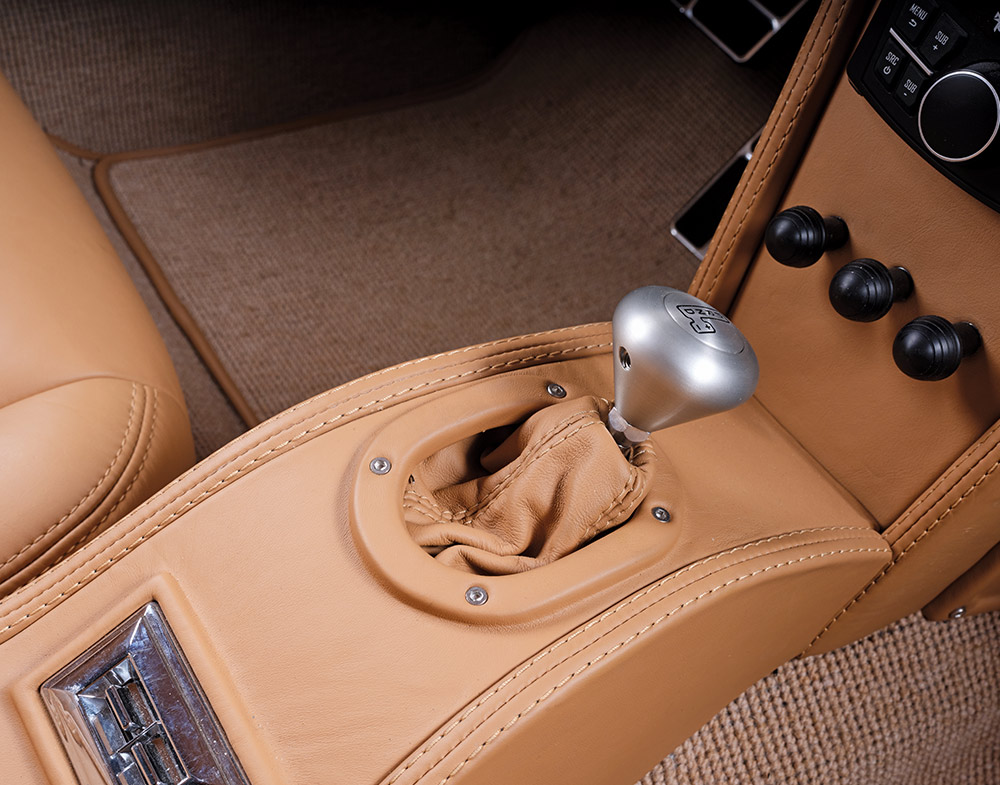
Close-up of the 1966 Corvette Stingray's leather-wrapped shifter and custom center console
Close-up of a custom wheel on the 1966 Corvette Stingray, featuring Billet Specialties rims and Michelin tires
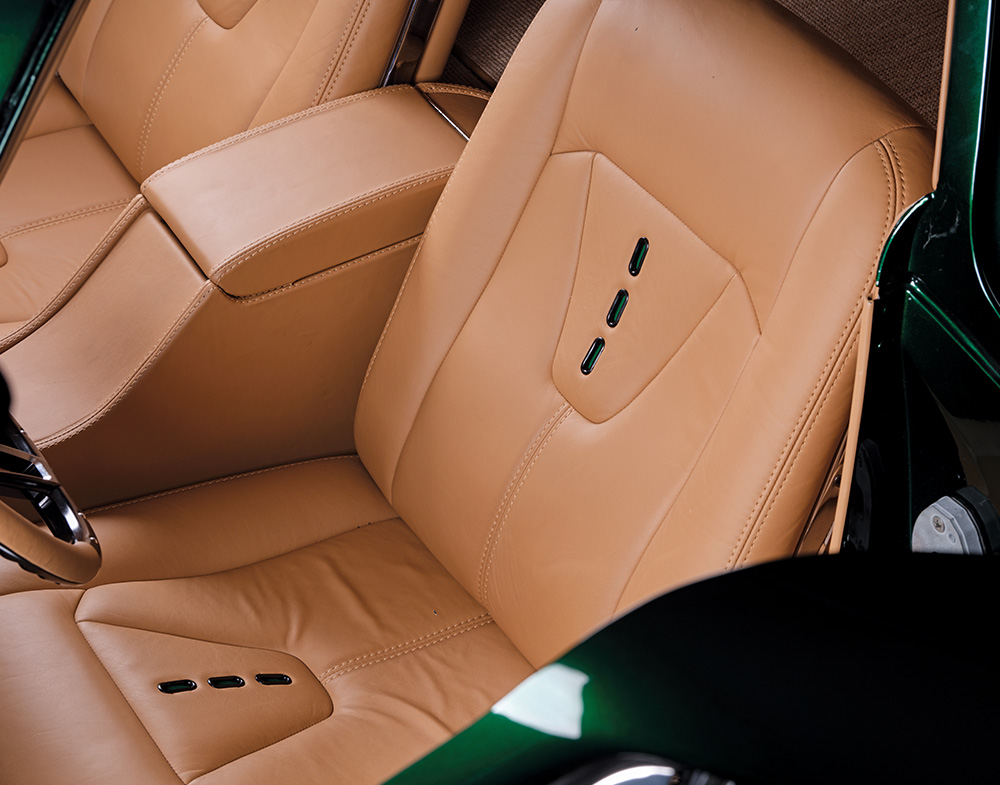
Tan leather seats inside the 1966 Chevrolet Corvette Stingray, showcasing custom stitching and sleek design
The body is based on a 1966 Corvette coupe (C2) with a modified back panel to handle the custom exhaust as it exits from under the body of the C2. Also, in the rear, the standard twin taillight Corvette taillight configuration was increased to three lights per side—a trendy customizing touch for many of the C2 Corvettes, especially from 1963 to 1965. Even the 1961-1962 Corvettes also benefited from this touch. The front clip, which on many Corvettes includes the front fenders, is a new piece. More custom touches include the one-of-a-kind rocker panels that were dropped 1-1/2 inches, the door opening was raised 1/4 inch, and all the body lines were sharpened. The subsequent body- and paintwork were nearly handled at Ryan’s Rod & Kustom by Ryan himself. The color is based on a PPG custom mixed candy green over a silver base and then sprayed with a PPG 2002 clear.

Inside the coupe, you will see Chuck Hanna Interiors in tan leather over reshaped C2 seats, door and kick panels, and Mercedes carpeting. The dash, while maintaining the C2 “look,” has been reshaped and covered in a glove leather material and fitted with a Vintage Air A/C system with blacked-out control knobs and Classic Instruments replacement gauges. The prerequisite wiring comes from a Ron Francis wiring harness installed at Ryan Rod & Kustom. There is also an Ididit steering column with a Billet Specialties wheel and a Lokar shifter.

This amazing-looking C2 was seen at the SEMA Show, the NSRA Builder’s Showcase, and several Goodguys events, proving that this hot rod was built to get out on the road and have some fun.
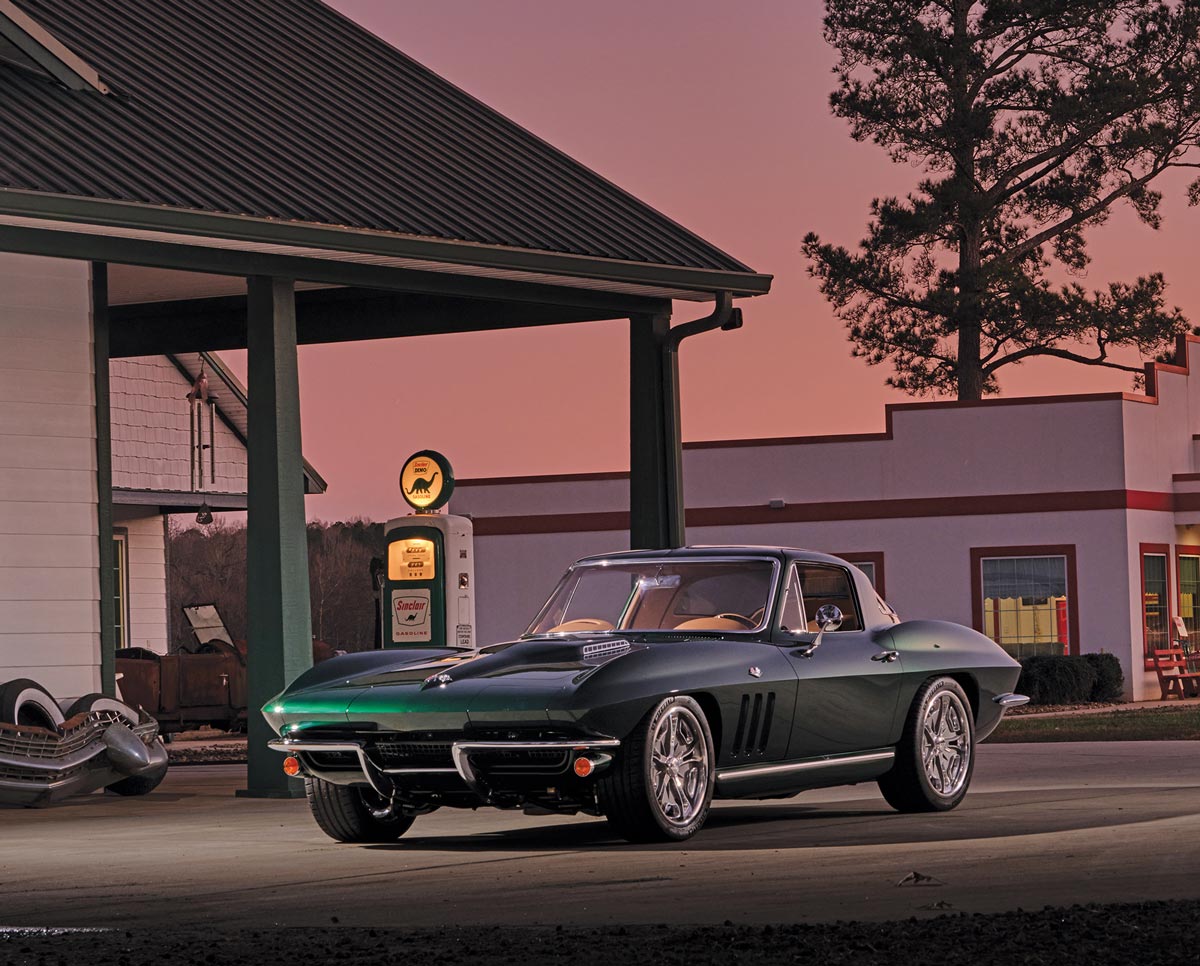
1966 Chevrolet Corvette Stingray parked at sunset near a vintage gas station with a purple and orange sky
Modern Rodding
VOLUME 5 • ISSUE 50 • 2024